
Albatrellus pes-caprae
Albatrellus pes-caprae
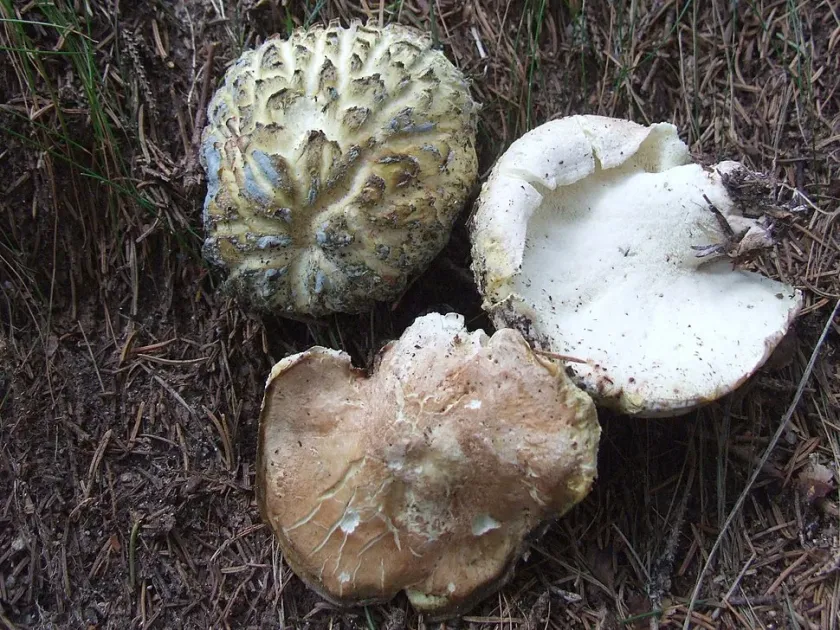
Description
Pathogen
Albatrellus pes-caprae, commonly known as the goat's foot mushroom, is a species of fungus in the family Albatrellaceae. It is important to note that it is not considered a plant pathogen in agricultural science.
The organism primarily exists as a soil-dwelling fungus, often found in symbiotic associations or as a saprotroph within forest ecosystems. It does not pose a threat to agricultural crops such as cereals or vegetables.
The vegetative body, or mycelium, of the fungus spreads through the leaf litter, absorbing organic matter. It produces distinctive fruiting bodies that are often found in deciduous and coniferous forests.
From an agronomical perspective, this species is classified as part of the native forest mycobiota. It lacks the mechanisms required to infect or damage the tissues of cultivated crop plants.
Scientific research into this fungus focuses on its ecological role and its sensitivity to environmental changes. It is a indicator species for specific soil health conditions within natural woodlands.
Conditions for development
The growth of the fungus is strictly tied to specific environmental parameters. It favors moist, acidic soils rich in humus, which are common in forest environments but rare in industrial agricultural land.
High moisture levels are critical for the formation of the fruiting bodies. During periods of drought or dry weather, the mycelium remains inactive within the soil, waiting for favorable conditions.
Albatrellus pes-caprae thrives in temperate climates. It is sensitive to soil disturbance and chemical fertilizers, which is why it is typically absent from tilled or intensively managed agricultural fields.
The fungus is often found in mature forests where the soil structure remains undisturbed. Changes in forest management or urbanization significantly impact its ability to colonize an area.
Temperature fluctuations do not affect the survival of the mycelium as much as changes in soil chemistry, specifically pH levels. The fungus is well-adapted to the stable environment of the forest floor.
Why it matters
There is no evidence suggesting that Albatrellus pes-caprae causes damage to crops. It is not listed as a plant disease and does not impact yield, quality, or plant health in agricultural settings.
In forest management, the fungus is considered harmless. It does not act as a wood-decay fungus that compromises the structural integrity of trees, as it primarily interacts with the root zone and soil organic matter.
Any perceived harm in nursery settings is purely aesthetic or indicative of soil conditions, rather than a result of pathogenic infection of the plant tissues.
The economic impact of this fungus is negligible, as it does not compete for resources with cultivated crops and does not act as a vector for other diseases.
Agronomists do not need to implement control measures for this species, as it represents no threat to agricultural productivity or food security.
Protection
Since the fungus is not a pathogen, there are no established chemical control measures. Application of fungicides for this species is unnecessary and discouraged.
In cases where it is desired to reduce the presence of the fungus in managed landscapes, simple mechanical removal of fruiting bodies is sufficient to prevent spore dispersal.
Modifying soil pH through liming is the most effective biological control method. By reducing the acidity of the soil, the environment becomes unfavorable for the growth of the mycelium.
Improving site drainage can also help, as excessive moisture often contributes to the success of this species. Maintaining a clean garden space by removing leaf litter limits the nutrient supply for the fungus.
- Mechanical removal of fruiting bodies;
- Soil pH adjustment via liming;
- Improved site drainage systems;
- Clearing of excessive leaf litter.
Discussion
No discussions yet — be the first.