
Albatrellus confluens
Albatrellus confluens
Description
Symptoms
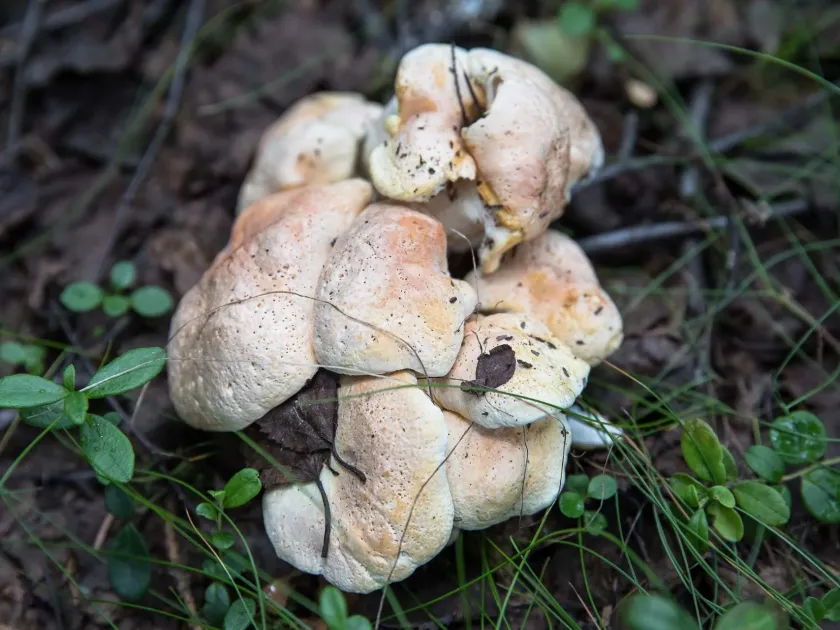
The most visible indicator of its presence is the formation of fleshy, often fused, fruiting bodies that emerge near the base of conifer trees.
The caps of these mushrooms have a lobed shape and a characteristic color range from salmon-orange to creamy-white, which fades as they dry.
The undersurface of the cap features small pores that release spores, marking the completion of the reproductive phase in the forest cycle.
Fruiting bodies typically appear in late summer or autumn, growing in clusters that can eventually form large, dense masses on the forest floor.
The presence of these mushrooms signals a healthy soil environment and robust mycorrhizal activity, which is essential for forest ecosystem development.
Pathogen
Albatrellus confluens is a basidiomycete fungus often mistakenly classified as a plant disease, while in reality, it serves as a beneficial mycorrhizal symbiont.
This fungus establishes close symbiotic relationships with the root systems of coniferous trees, particularly spruce and pine, facilitating nutrient exchange.
Unlike pathogenic organisms, it does not destroy host tissues; instead, it creates a mutualistic partnership that supports the vitality of the forest.
Its biological activity occurs primarily underground, where its mycelium interacts with tree roots to increase water and mineral absorption capacity.
Since it lacks parasitic properties, it poses no threat to trees and is not subject to any phytopathological control measures or eradication programs.
Conditions for development
The development of Albatrellus confluens is strongly dependent on high soil moisture and the presence of organic matter found in undisturbed coniferous forests.
Stable temperatures between 15°C and 20°C during the late growing season are ideal for the rapid emergence of its fruiting structures.
The fungus prefers acidic soil conditions that are characteristic of coniferous woodlands where competitive pressure from other microbes is balanced.
An intact forest floor layer, rich in decaying needles and organic material, provides the necessary substrate for mycelium growth and expansion.
Any disruption to the microclimate or soil composition can significantly hinder the fungus's ability to produce its reproductive bodies.
Why it matters
This fungus is completely harmless and does not act as a pest or disease vector for any forest or agricultural crops.
It enhances tree resilience by aiding the uptake of essential nutrients, thereby acting as a natural growth promoter rather than a pathogen.
Misidentifying this fungus as a root rot agent can lead to unnecessary concerns, but inspection will reveal no necrotic or damaging signs on host trees.
There is no economic damage associated with this species; in fact, its ecological services support forest stability and health over time.
It remains a non-threatening, natural component of forest biodiversity that contributes positively to the vitality of its surrounding woody hosts.
Protection
There are no control measures for Albatrellus confluens, as it is a beneficial part of the ecosystem rather than a plant disease.
Conservation of its natural habitat and avoiding excessive use of fungicides in forests are the best practices for maintaining healthy mycorrhizal networks.
Education is vital to ensure that land managers and foresters correctly distinguish beneficial symbiotic fungi from real plant pathogens.
No chemical, mechanical, or biological control interventions are required or recommended for this species in any setting.
Supporting forest biodiversity is the only necessary approach to ensure these helpful fungal partners continue to thrive in their environment.
Discussion
No discussions yet — be the first.