
Albatrellus peckianus
Albatrellus peckianus
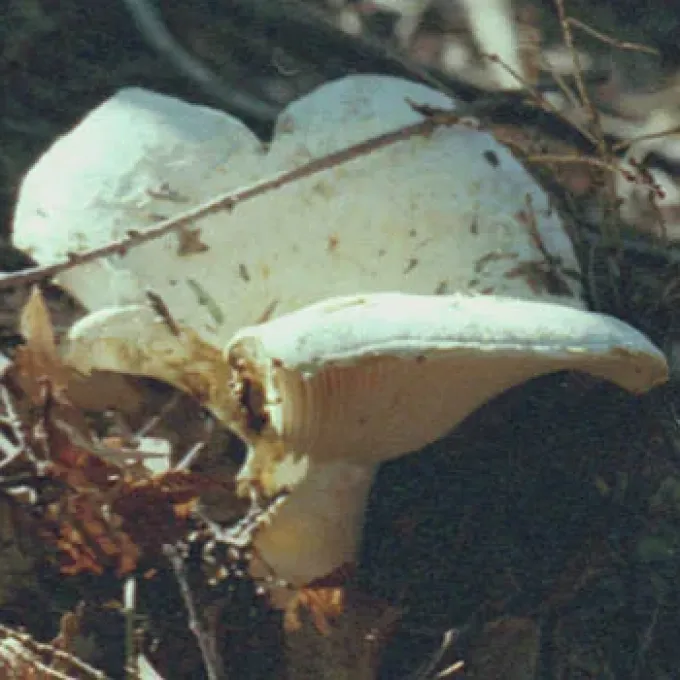
Description
Symptoms
The most visible sign of infection is the emergence of white to yellowish fruiting bodies near the base of the tree trunk, often appearing during periods of high humidity.
Affected roots exhibit significant decay, becoming soft, brittle, and discolored. This internal deterioration is often hidden beneath the soil surface, making early detection difficult.
Above-ground symptoms include gradual leaf or needle yellowing, thinning of the canopy, and premature shedding of foliage as the tree struggles to transport nutrients.
A distinct mat of white mycelium can often be found under the bark of the root collar, serving as a primary indicator of active fungal colonization.
As the root system weakens, the tree loses stability, significantly increasing the risk of windthrow, where even moderate gusts can uproot the infected tree.
Pathogen
Albatrellus peckianus is a fungal species belonging to the Albatrellaceae family. In forestry and plant pathology, it is recognized as a facultative pathogen capable of affecting tree root systems.
The fungus typically starts its life cycle as a saprotroph, feeding on decaying organic matter in forest soils before transitioning to parasitize living root tissues when the tree is stressed.
The mycelium of the fungus develops extensive networks in the soil and leaf litter, which allows it to reach and infect the roots of susceptible tree species through direct contact.
Its biological cycle is characterized by the production of fruiting bodies near the tree base, which release spores that contribute to the dispersal of the fungus within the forest environment.
The fungus produces specialized enzymes that break down wood fibers, leading to the decay of the root system and ultimately undermining the health of the host tree.
Conditions for development
Albatrellus peckianus thrives in moist, temperate environments, with soil moisture being the most critical factor for the growth and spread of its mycelial network.
Trees that are under stress—whether due to drought, mechanical injury to the roots, or poor soil aeration—are significantly more susceptible to infection by this fungus.
The presence of large amounts of decaying organic matter in the soil provides a perfect starting point for the fungus to establish its colony before attacking living roots.
Compact soils that lack proper drainage create stagnant conditions that favor the pathogen, as these environments prevent natural antagonism from beneficial soil microbes.
Periods of heavy, prolonged rainfall during the growing season trigger the rapid development of fruiting bodies and increase the overall infectious potential in a given forest area.
Why it matters
The primary danger lies in the systemic destruction of the tree's root system, which prevents the uptake of water and nutrients, eventually leading to tree death.
In forest nurseries and plantations, this fungus can cause substantial economic losses by killing young seedlings, thus affecting the density and viability of future timber crops.
The decay caused by the fungus predisposes trees to secondary attacks from stem-boring insects and other opportunistic pathogens that thrive in weakened hosts.
In dense stands, the pathogen spreads through root contact, turning small, isolated infection spots into larger patches of dying forest, which is difficult to contain.
Trees infected with this fungus lose their landscape and recreational value, as they become safety hazards in parks and public forests due to the risk of sudden collapse.
Protection
Sanitation is the most effective approach; all infected trees must be removed, including their root systems, to prevent the pathogen from spreading further.
Regular monitoring of forest health, particularly after wet seasons, is essential for identifying potential infection sites before they expand significantly.
- Improve soil drainage to reduce humidity in the root zone.
- Apply specific fungicides if early infection is detected in high-value trees.
- Avoid mechanical damage to roots during forest thinning and maintenance.
- Thin out forest stands to improve airflow and reduce soil moisture levels.
The use of biological control agents, such as beneficial fungi that compete with Albatrellus peckianus, can help establish a protective barrier for healthy trees.
Proper forest hygiene, including the removal of decaying stumps and large woody debris near healthy trees, helps to limit the food source available for the fungus.
Discussion
No discussions yet — be the first.