
Albifimbria verrucaria
Albifimbria verrucaria
Description
Symptoms
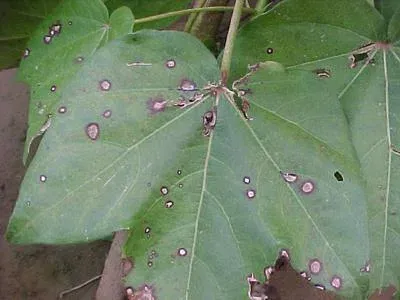
The primary symptoms appear as water-soaked lesions on leaves, stems, and shoots. As the infection progresses, these lesions turn dark brown or grey, often surrounded by a chlorotic or necrotic halo.
Under conditions of high relative humidity, the centers of these necrotic lesions become covered with white or greenish sporodochia, often arranged in concentric circles, which serves as a definitive diagnostic feature of the disease.
As tissues die, the affected areas may tear, leading to shot-hole symptoms in foliage. In cases of systemic infection, plants often exhibit wilting and stunted growth due to the damage caused to the vascular and root tissues.
Root rot is another common symptom, which weakens the plant's structural integrity and ability to absorb water. Seedlings infected by the fungus often suffer from pre-emergence or post-emergence damping-off.
On fruits and seeds, the pathogen manifests as sunken spots covered with spore masses. This significantly degrades the visual quality and physiological viability of the harvested agricultural produce.
Pathogen
The causal agent of this disease is the fungus Albifimbria verrucaria, formerly classified as Myrothecium verrucaria. This pathogen belongs to the group of mitosporic fungi and is known for its ability to persist in the environment and colonize various organic substrates.
It is a facultative parasite, meaning it can thrive as a saprotroph on crop residues. It produces characteristic sporodochia — cushion-shaped structures bearing spores — which are often visible to the naked eye on infected plant parts during humid weather.
A key biological feature of this fungus is the production of macrocyclic trichothecenes, which are highly potent mycotoxins. These toxins are responsible for the rapid necrosis of plant cells and the systemic collapse of host tissues.
The fungus spreads primarily via conidia, which are easily disseminated by wind, water splashes, and agricultural machinery. These spores can remain viable for extended periods in soil, awaiting the appropriate conditions for germination.
Albifimbria verrucaria has a broad host range, infecting a wide array of agronomic crops and ornamental plants. This generalist nature makes it a persistent challenge in diverse agricultural systems.
Conditions for development
The disease thrives in warm and humid environments. High relative humidity (exceeding 85-90%) is the primary driver for sporulation and the subsequent spread of the fungus within a field or greenhouse.
Optimal temperatures for fungal growth range from 20°C to 28°C (68°F - 82°F). Within this temperature window, the infection process is rapid, leading to visible symptom development within a few days.
Dense canopy structures provide an ideal microclimate for the pathogen. Poor air circulation leads to prolonged moisture on leaf surfaces, which is essential for the conidia to germinate and penetrate the host tissue.
The accumulation of crop debris provides a long-term reservoir for the fungus. In such substrates, the pathogen can survive adverse weather conditions, ensuring its persistence from one season to the next.
Mechanical injuries to plant tissues, caused by storms, pruning, or insect feeding, significantly increase the susceptibility of the plant to Albifimbria verrucaria infection.
Why it matters
The primary economic harm stems from the reduction of photosynthetic leaf area, which limits biomass accumulation and results in significant yield losses for growers.
Severe infestations can lead to high seedling mortality rates, requiring extensive replanting and increasing production costs during the critical early stages of crop development.
The accumulation of mycotoxins in the harvested product poses safety risks, as it may render the produce unsuitable for food, feed, or processing purposes due to toxicity concerns.
In ornamental horticulture, the disease results in severe aesthetic damage. Infected plants are often unsellable, leading to total financial losses for nurseries and greenhouse businesses.
Weakened plants are more susceptible to secondary infections and environmental stressors, creating a compounding negative effect on the overall health and longevity of the crop.
Protection
Effective management begins with strict crop rotation. Avoiding the planting of susceptible crops in the same field for several consecutive years helps reduce the inoculum density in the soil.
Good field sanitation is essential. This includes the removal and deep burial or destruction of crop residues, which minimizes the fungus's ability to survive in the ecosystem.
The use of certified disease-free seeds and the application of appropriate fungicidal seed treatments are crucial for preventing early-season infections.
During the growing season, systemic fungicides—particularly those containing triazoles or strobilurins—can provide effective protection when applied based on threshold monitoring and early symptom detection.
Cultural practices that improve air circulation, such as maintaining appropriate plant spacing and controlling weed growth, are highly effective in reducing the humidity levels necessary for disease development.
Discussion
No discussions yet — be the first.