
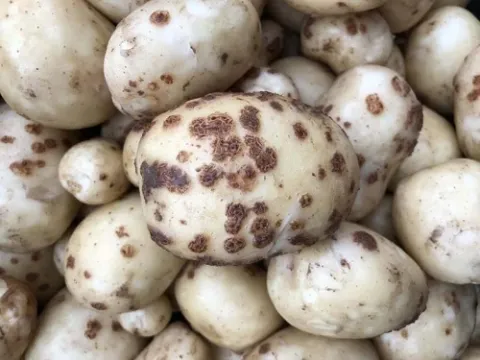
Common scab of potato
Streptomyces rimosus
Common scab is caused by soil-borne bacteria belonging to the genus Streptomyces, primarily Streptomyces scabies and related species like Streptomyces rimosus. These organisms are actinomycetes, characterized by filamentous growth similar to fungi.
What the section contains
Common scab of potato
These bacteria live as saprophytes in the soil, feeding on decaying organic matter. They can persist in the soil for many years, even in the absence of a host crop, making them extremely difficult to eradicate from affected fields.
The pathogen infects the developing tubers through lenticels or wounds caused by physical damage. Once inside, the bacteria secrete enzymes that degrade plant cell walls, leading to the characteristic scab-like lesions.
While potato is the most economically significant host, the pathogen also affects other root and tuber crops like sugar beets, parsnips, and radishes. The wide host range complicates crop rotation strategies for commercial farmers.
The spread of the disease is facilitated by contaminated seed potatoes, movement of infested soil by machinery, and wind-blown dust during tillage operations.
Symptoms appear on the surface of tubers as lesions that vary significantly in appearance. Depending on the environment and cultivar, they can manifest as superficial russeting, raised pustules, or deep-pitted craters.
The lesions typically range in color from tan to dark brown. Over time, these areas become corky and rough, which significantly decreases the visual appeal of the tubers and reduces their market grade for fresh sales.
Pitted scab is particularly destructive, resulting in deep, crater-like lesions with raised borders. These wounds serve as entry points for secondary decay-causing pathogens, leading to significant storage losses.
In some cases, the entire tuber surface can be covered in a netted pattern of corky tissue. This condition is often referred to as "netted scab" and can affect the entire yield of susceptible varieties.
Root and stolon infection is also possible, though less frequently observed than tuber symptoms. Severe infestations on young stolons can stunt the growth and development of the potato plant.
Common scab development is heavily influenced by soil pH. The bacteria thrive in neutral to alkaline soil conditions (pH 6.5–8.0). Highly acidic soils (pH 5.2 and below) effectively suppress the activity of the pathogen.
Temperature plays a crucial role in the development of the disease. Temperatures between 20°C and 30°C are optimal for the pathogen to thrive and infect developing tubers during their most vulnerable stage.
Soil moisture levels are critical. Infections are most severe when the soil is dry during the early stages of tuber initiation. Adequate moisture during this period can physically inhibit bacterial colonization of lenticels.
The application of fresh manure or heavy liming prior to planting creates a favorable environment for Streptomyces. These practices increase soil pH and provide excess nutrients that favor the pathogen's growth.
Loose, well-aerated soils promote the growth of these aerobic bacteria. Therefore, soil structure and management practices that compact the soil or maintain higher moisture levels can limit disease incidence.
The primary damage caused by common scab is cosmetic, resulting in significant downgrading of the potato crop. Scabby tubers are often rejected by retailers and high-end processing facilities.
The integrity of the tuber skin is compromised, leading to increased water loss during storage. This results in shriveled potatoes and weight loss, reducing the profitability of long-term storage.
The corky lesions provide an open pathway for opportunistic rot-causing fungi and bacteria. Consequently, scabby potatoes are much more susceptible to soft rot and other storage diseases, leading to mass spoilage.
Processing quality is negatively impacted. Lesions can lead to uneven frying and darkening of potato chips or french fries, which is a major concern for the potato processing industry.
In cases of severe infection, seed vigor can be reduced, leading to poor emergence and uneven crop stands, which ultimately results in lower total yield per hectare.
The most effective management strategy is the maintenance of soil pH in the range of 5.0–5.5. Utilizing acidifying fertilizers like ammonium sulfate can help create a less hospitable environment for the pathogen.
Crop rotation remains a fundamental practice. Including green manure crops that lower soil pH or suppress pathogen populations can significantly reduce the infection pressure in the field.
Planting resistant varieties is the best long-term solution, especially in fields with a known history of the disease. Growers should always select high-quality, certified, disease-free seed tubers.
Irrigation management is essential. Ensuring sufficient soil moisture during the tuber initiation phase is the most effective cultural method to prevent the bacteria from entering the young tubers.
- Avoid over-liming soils.
- Use physiologically acid fertilizers.
- Ensure adequate irrigation during tuber set.
- Clean machinery to prevent cross-contamination.
- Use certified disease-free seed potatoes.