
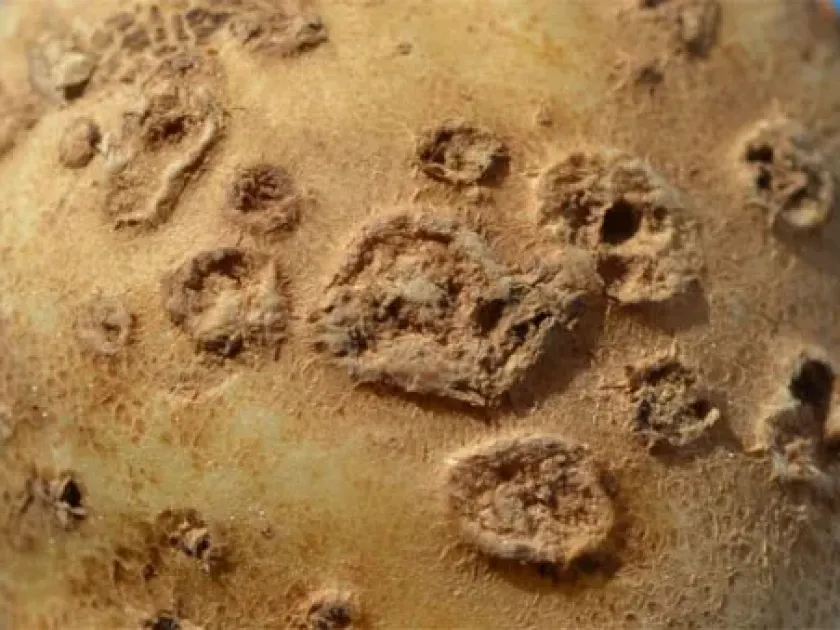
Description
Symptoms
The primary symptom of common scab is the appearance of corky, rough lesions on the surface of potato tubers. These lesions vary in appearance, ranging from shallow, superficial scabs to deep, pitted craters with raised edges.
The disease typically begins as small, discolored pustules that expand as the tuber grows. Over time, these spots harden and turn brown, significantly marring the appearance of the potato and making it unattractive for consumers.
In severe cases, the lesions can merge to cover a significant portion of the tuber surface. These scabby areas often develop cracks, which not only look bad but also compromise the physical integrity of the tuber's skin.
It is important to note that the disease is localized on the tubers. The above-ground foliage of the potato plant remains unaffected, which often makes the disease go unnoticed until the harvest when the damage is already severe.
While the internal flesh of the potato is usually healthy, the compromised skin increases water loss and vulnerability to secondary infections, ultimately reducing the storage life of the affected harvest.
Pathogen
The causative agent of common scab is a group of filamentous bacteria (actinomycetes) known as Streptomyces species, with Streptomyces scabies being the most common pathogen.
These organisms are soil-dwelling and can survive for many years in the ground as saprophytes, feeding on decaying organic matter. Their resilience allows them to persist even in the absence of a host crop.
The pathogen is spread primarily through infected soil, which can be moved via farm machinery, tools, or contaminated seed tubers. They enter the potato through natural openings like lenticels or through tiny mechanical wounds.
Once inside the tuber tissue, the bacteria produce enzymes that stimulate the plant to produce corky tissue as a defense mechanism, which results in the characteristic scabbed appearance of the skin.
Common scab is not limited to potatoes; it also affects other root vegetables such as beets, radishes, and carrots. This wide host range means the pathogen can maintain its population even when potatoes are rotated with other root crops.
Conditions for development
Common scab thrives in light, well-aerated, sandy or gravelly soils where oxygen levels are high. These conditions are ideal for the rapid growth and colonization of Streptomyces bacteria.
Soil pH is a major factor in disease development. S. scabies prefers neutral or slightly alkaline soil environments (pH 6.0–7.5). Soils with a lower pH (below 5.3) are generally much less prone to severe outbreaks.
Moisture availability during the period of tuber initiation is critical. Low soil moisture during the first few weeks after planting significantly increases the incidence and severity of the disease.
The use of fresh manure or heavy applications of lime (calcium) can raise the soil pH, creating a favorable environment for the pathogen. Sustainable nutrient management is key to preventing widespread infection.
Warm soil temperatures, typically ranging from 20°C to 25°C, promote the activity of the bacteria. Prolonged heat and drought during the critical growth phases are the most common triggers for a heavy infestation.
Why it matters
The most immediate impact of common scab is the loss of commercial value. Potatoes with scabby surfaces are rejected by retailers and consumers, often leading to significant financial losses for the grower.
The damage to the tuber's skin layer leads to increased dehydration during storage. Affected potatoes lose moisture much faster than healthy ones, causing them to shrivel and lose weight prematurely in storage bins.
Scab lesions create open pathways for various storage rots. Bacteria and fungi that would otherwise be stopped by healthy skin can easily penetrate the scabbed areas, leading to secondary infections and total decay of the harvest.
When used as seed potatoes, scabby tubers may exhibit poor sprouting and reduced vigor, leading to uneven crop emergence and lower overall yields in the following season.
Beyond the direct loss of produce, farmers face the cost of labor-intensive sorting and potential regulatory rejection of their products, limiting their ability to access high-end produce markets.
Protection
The most effective strategy against common scab is integrated pest management. Crop rotation is essential, ideally including non-host crops like cereals or alfalfa to reduce the population of Streptomyces in the soil.
Maintaining adequate soil moisture through irrigation during the tuber initiation phase (the first 2–4 weeks after the tubers start to form) is the most proven method to minimize the incidence of the disease.
- Selecting potato varieties that demonstrate natural resistance to common scab.
- Using physiologically acidic fertilizers such as ammonium sulfate to lower soil pH.
- Avoiding the application of large amounts of fresh lime or wood ash.
- Ensuring seed potatoes are disease-free and properly certified.
Biological control agents, such as specific strains of Bacillus subtilis, can be applied at planting to compete with and suppress the population of the pathogen in the immediate soil environment around the tuber.
Rigorous cleaning of farming equipment after working in infested fields is necessary to prevent the spread of the pathogen to clean areas of the farm or neighboring plots.
Pathogens and affected parts
Affects crops · 1
Discussion
No discussions yet — be the first.