
Common bacterial blight of bean
Xanthomonas phaseoli
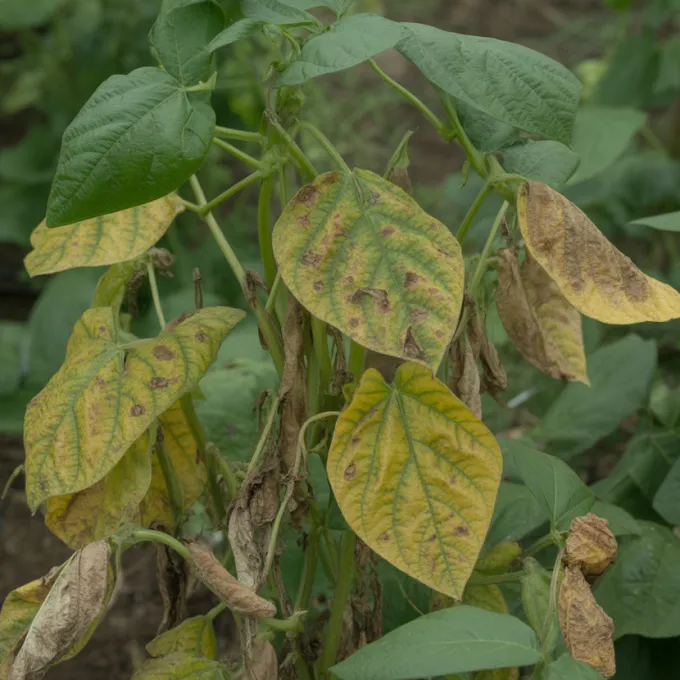
Description
Symptoms
Initial symptoms include small, water-soaked spots on the leaves that gradually expand, turn brown, and develop a distinct, bright yellow halo around the necrotic area.
Under high humidity, a viscous, yellowish bacterial exudate may be visible on the undersides of the infected leaves; this exudate eventually dries into a shiny, translucent crust.
Stem lesions appear as reddish-brown streaks or cankers which can weaken the stem, leading to lodging or the sudden wilting of the plant tops due to vascular disruption.
Pods exhibit small, water-soaked spots that darken as they grow. The infection can penetrate the pod wall and reach the seeds, causing discoloration, shriveling, and deformation.
Infected seeds often show signs of the pathogen, such as yellowish or necrotic spots on the seed coat, serving as a primary source for the following season's infection.
Pathogen
The causal agent of this disease is the Gram-negative bacterium Xanthomonas phaseoli. This pathogen invades the vascular system of the bean plant, causing systemic infection and tissue necrosis.
The bacterium is highly resilient and can survive in infected seeds, crop debris, and soil, remaining viable for several seasons until favorable conditions for infection appear.
It typically enters the host plant through natural openings such as stomata and hydathodes, or through wounds created by insects, hail, or mechanical handling during cultivation.
Once inside, the pathogen secretes extracellular enzymes that degrade plant cell walls, leading to rapid water-soaking and the collapse of plant tissue structure.
The spread of the bacteria within a field occurs primarily via splashing rain, overhead irrigation, wind, and direct physical contact between foliage, as well as mechanical transmission by agricultural equipment.
Conditions for development
The development of common bacterial blight is heavily favored by warm, humid weather, with optimal temperatures for bacterial proliferation ranging from 25°C to 30°C.
Frequent rainfall, high humidity levels (exceeding 80%), and persistent morning dews significantly accelerate the movement and infection rate of the pathogen.
Fields with dense canopy growth and poor air circulation maintain moisture longer, creating a perfect environment for the pathogen to thrive and spread rapidly.
Poor agricultural practices, such as using untreated or infected seed stocks, create an immediate source of inoculum that can trigger an epidemic within the crop.
Temperature fluctuations combined with high moisture stress the plants, making them more susceptible to the successful colonization of the bacterial agent.
Why it matters
The disease causes significant defoliation, which severely reduces the plant's photosynthetic capacity, leading to stunted growth and substantially lower crop yields.
Early-stage infections can lead to total crop failure, as pods may not develop properly, and severely infected seeds are either non-viable or of very poor quality.
The infection negatively impacts marketability, as damaged seeds lose their nutritional value and appearance, making them unsuitable for food processing or export.
Beyond yield loss, the disease incurs significant costs related to chemical control, labor for mitigation, and the potential need for field abandonment in extreme cases.
The persistence of the pathogen in the soil forces farmers to adopt longer crop rotation cycles, which can complicate the overall farm management and profitability.
Protection
The primary control strategy involves using high-quality, certified disease-free seeds produced in areas where the disease is not known to occur.
Implementing a strict 3-4 year crop rotation is essential to allow for the natural decomposition of infected crop debris and the reduction of the soil-borne pathogen population.
Sanitation practices, such as deep plowing to bury crop residues and the systematic control of weeds that may host the bacteria, are crucial for disease prevention.
When symptoms appear, the application of copper-based bactericides can help limit the spread of the disease, though they are more effective as a preventative measure.
Breeding and planting resistant bean cultivars remain the most effective and sustainable long-term approach to managing this persistent bacterial pathogen.
Discussion
No discussions yet — be the first.