
Common potato scab
Streptomyces turgidiscabies
Description
Symptoms
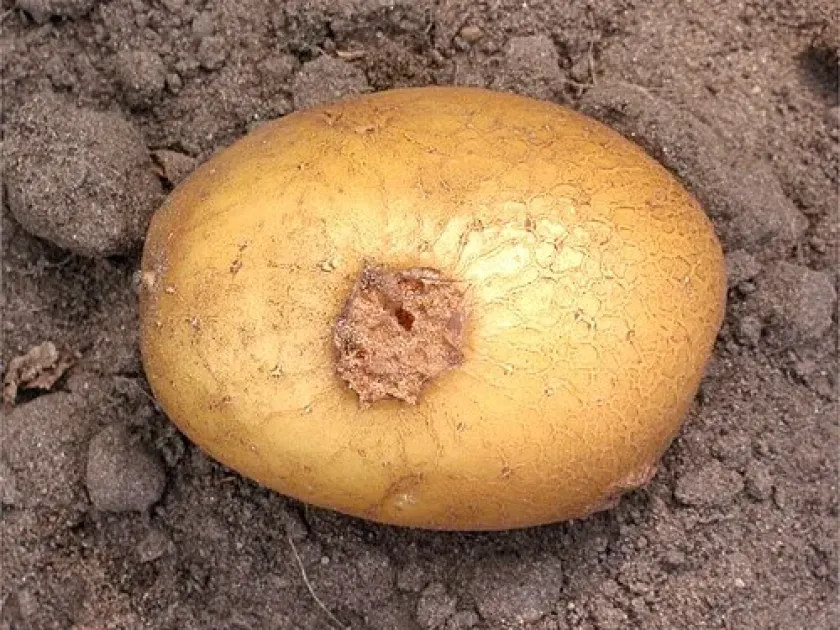
Symptoms of common scab appear as localized lesions on the skin of mature tubers. These lesions vary significantly in appearance, ranging from superficial surface russeting to deep, corky pits.
In the early stages, small, light-colored spots appear on the tuber surface. As the tuber grows, these spots enlarge, turn brown, and develop into rough, scaly patches due to the plant's defense response, which produces corky tissue.
Severe infestations can lead to confluent lesions that cover the entire surface of the tuber, significantly reducing its aesthetic appeal and commercial value.
While the disease primarily affects tubers, it can also cause damage to the root system, although these symptoms are less diagnostic and often go unnoticed by growers.
- Surface (flat) scab.
- Raised (pustular) scab.
- Deep (pitted) scab.
- Russet scab.
Pathogen
Common potato scab is caused by soil-inhabiting actinomycetes, primarily Streptomyces turgidiscabies. Unlike fungi, these are filamentous, gram-positive bacteria that survive in the soil as saprophytes on organic matter.
The pathogen infects developing tubers, stolons, and roots. It enters the plant primarily through lenticels, which are natural openings for gas exchange on the surface of the tuber skin.
These bacteria are incredibly resilient and can persist in the soil for many years, even in the absence of a host plant. They utilize a wide range of organic compounds for nutrition, allowing them to remain active in diverse agricultural soils.
Genetic studies have identified specific virulence factors in Streptomyces species that enable them to colonize potato tissue effectively, leading to the characteristic necrotic symptoms.
The ability of the pathogen to compete with other soil microorganisms makes it a persistent challenge for commercial potato production worldwide.
Conditions for development
Environmental conditions play a crucial role in disease development. Scab is most prevalent in dry, warm soils during the tuber initiation and early bulking stages.
Soil pH is a primary driver of infection; the pathogen thrives in neutral to alkaline soils (pH 6.0 to 7.5). On the other hand, high acidity (pH below 5.2) significantly inhibits the activity of Streptomyces.
Soil aeration also influences disease severity. Well-aerated, lighter soils generally promote more severe scab infection compared to heavy, compacted soils with limited oxygen supply.
The application of fresh manure or lime shortly before planting often increases the risk of the disease by creating an alkaline microenvironment and providing an abundance of nutrients for the bacteria.
Soil temperatures between 20°C and 25°C are considered optimal for the rapid growth and colonization of the tubers by the pathogen.
Why it matters
The primary economic impact of common scab is the reduction in the marketability of the potato crop. Tubers with visible scab lesions are often rejected by retailers or consumers due to their unattractive appearance.
In addition to cosmetic damage, the disease impairs the storage potential of potatoes. Lesions break the integrity of the skin, increasing the risk of dehydration and infection by secondary storage pathogens.
High levels of infection can cause significant yield loss, as damaged tubers often fail to reach standard sizes and quality grades required for industrial processing.
For seed potato producers, scab is a major issue because infected tubers can spread the pathogen to previously clean fields, potentially creating long-term contamination.
Processing costs, such as peeling and trimming, increase substantially when dealing with scabby potatoes, leading to higher waste percentages in food manufacturing.
Protection
Selecting resistant potato varieties is the most effective and sustainable strategy for managing common scab, especially in fields with a history of the disease.
Implementing a proper crop rotation with non-host crops, such as rye, oats, or certain forage legumes, can help manage pathogen populations in the soil over time.
Irrigation management is critical; maintaining high soil moisture levels during the period of tuber initiation and early development can significantly reduce the severity of the scab.
Avoiding the use of fresh manure and over-liming before potato planting helps maintain a soil pH that is less favorable for Streptomyces development.
The use of physiologically acidic fertilizers, such as ammonium sulfate, can help create a slightly acidic microenvironment in the rhizosphere, which discourages the pathogen during the vulnerable stage of tuber growth.
Discussion
No discussions yet — be the first.