
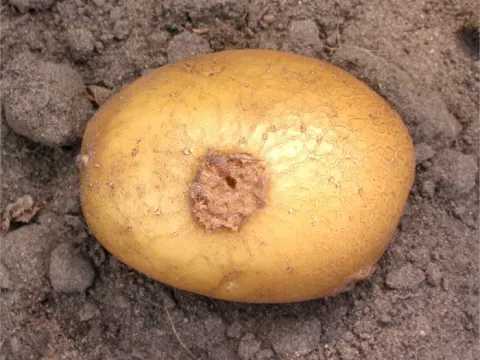
Common scab of potato
Streptomyces acidiscabies
The causal agent of common scab is Streptomyces acidiscabies, a soil-borne actinomycete that exhibits characteristics of both bacteria and fungi.
What the section contains
Common scab of potato
This pathogen can persist in the soil for many years by saprophytically feeding on organic matter, making it highly resilient in various environments.
Unlike other common scab pathogens, this species is specifically noted for its ability to cause infection in acidic soil conditions.
The primary source of inoculum includes contaminated soil and infested potato tubers used as seed, which introduce the pathogen to new fields.
Infection occurs predominantly during the early stages of tuber development, when the pathogen enters through lenticels or small mechanical wounds.
Initial symptoms include small, reddish-brown spots that expand into lesions of varying depth and morphology on the tuber surface.
Characteristic scab-like scabs, cracks, or deep pits with raised margins often develop, significantly affecting the appearance of the harvested tubers.
Symptoms are classified into different types, such as surface scab, netted scab, or deep-pitted scab, depending on the severity and host response.
Under humid conditions, a fine grayish-white mycelial growth may sometimes be visible on the surface of the scab lesions.
While the internal flesh of the potato remains largely unaffected, the outer layer becomes distorted and covered in necrotic cork-like tissue.
The development of Streptomyces acidiscabies is strongly favored by warm, dry weather conditions during the tuber initiation and enlargement phases.
Soil moisture levels are critical; dry soil conditions during the susceptible growth stage significantly increase the incidence and severity of the disease.
Excessive liming of the soil or the application of fresh manure can create an environment that encourages the proliferation of the scab pathogen.
Soil temperatures between 20°C and 25°C are optimal for the growth and infection processes of this actinomycete.
Continuous potato production without a proper crop rotation cycle allows the population of the pathogen to build up in the topsoil layers.
The primary impact of common scab is the reduction of marketable yield due to the unattractive appearance of the affected tubers.
Infected potatoes have a higher risk of secondary infection by soft rot bacteria and molds during storage due to the damaged skin barrier.
Consumer demand for high-quality, uniform produce means that scabby tubers are often rejected, leading to significant financial losses for producers.
While the nutritional value of the potato is generally preserved, the loss of skin integrity affects processing quality, especially for high-value products.
Using infected seed potatoes leads to an immediate spread of the disease within the current field and contributes to a long-term decline in soil health.
Effective management strategy relies on the use of clean, certified seed potatoes and the selection of varieties with documented resistance to scab.
Implementing a long-term crop rotation with non-host crops, such as legumes or small grains, is essential for reducing pathogen levels in the soil.
- Tuber seed treatment with authorized fungicides.
- Irrigation management during tuber set to prevent drought stress.
- Avoidance of fresh manure applications immediately before planting.
- Use of acid-forming fertilizers to manage soil pH levels.
Biological control agents, including specific strains of Bacillus subtilis, have shown potential in suppressing pathogen activity in the rhizosphere.
Post-harvest hygiene, including the removal and destruction of infected haulm and tuber residues, helps maintain a lower inoculum potential for subsequent seasons.