
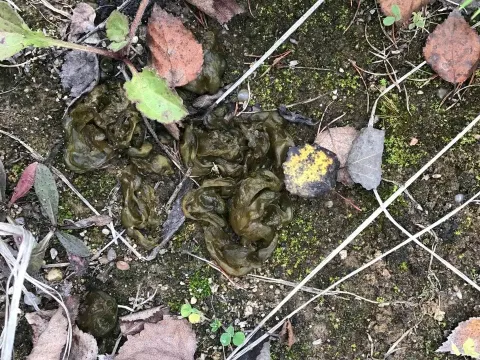
Nostoc commune
Nostoc commune
Nostoc commune is a colonial cyanobacterium often mistaken for a fungal disease or mold due to its jelly-like appearance in moist conditions.
What the section contains
Nostoc commune
It is a photosynthetic organism capable of nitrogen fixation, which allows it to colonize bare or poorly managed soil surfaces effectively.
While not a direct parasite of plants, it acts as a competitor for light and space, especially in nurseries and greenhouses where moisture is high.
The biological nature of the organism includes a state of dormancy during dry periods, allowing it to survive environmental stress and reappear when wet.
Its ability to form large thalli makes it a significant nuisance in soil management, as it alters the physical properties of the topsoil layer.
The primary symptom is the presence of slimy, dark green or olive-colored clusters that appear on the surface of saturated soil.
These clusters expand into gelatinous mats that can cover significant areas of soil within a short period, especially in protected environments.
When the soil dries out, the colonies turn into brittle, dark, paper-like sheets that cling tightly to the surface of the growing medium.
A distinctive fishy or pond-like odor is often present near large colonies of Nostoc commune, serving as a secondary indicator of its presence.
In seedbeds, the formation of this layer acts as a physical barrier, preventing seedlings from breaking through the soil surface properly.
High soil moisture combined with frequent, light watering is the most significant condition facilitating the rapid spread of these cyanobacteria.
Greenhouses and nurseries with poor ventilation and stagnant air provide ideal conditions for the colonization of soil surfaces by Nostoc.
Lack of light management or excessive direct light on wet soil promotes photosynthesis and rapid multiplication of the bacteria.
Compacted soil with poor drainage leads to surface water accumulation, which serves as a prime nursery for colony growth.
Increased soil fertility, particularly high levels of available phosphorus, can favor the dominant growth of Nostoc over other soil microorganisms.
The primary harm is the formation of a dense surface crust that severely restricts aeration and gas exchange for the plant's root system.
Its presence competes with young plants for light and can cause localized shifts in soil pH, negatively impacting the root zone environment.
By retaining excessive moisture on the soil surface, Nostoc commune promotes the growth of damping-off fungi and other root pathogens.
The physical presence of the slimy mats can harbor small pests and hinder the uptake of essential nutrients by smaller agricultural crops.
Agricultural productivity decreases when soil surfaces become choked with these colonies, necessitating corrective soil tillage operations.
Improving surface drainage and avoiding over-irrigation are the most critical cultural practices for managing and preventing Nostoc outbreaks.
Frequent surface cultivation or tilling helps break up the bacterial mats and allows for better soil aeration and moisture regulation.
In greenhouses, applying a layer of coarse sand, perlite, or gravel over the soil surface can limit the light availability and discourage growth.
Proper ventilation reduces relative humidity and surface moisture, making the environment less favorable for the survival of the colonies.
- Removal and replacement of the contaminated topsoil layer.
- Adjustment of irrigation frequency to allow surface drying.
- Application of specialized algaecides where permitted.