
Nocardiosis
Nocardiaceae
Nocardiosis is caused by bacteria belonging to the Nocardiaceae family, which are gram-positive, aerobic actinobacteria. They are known for their ability to form branching filaments that eventually fragment into rods or cocci.
What the section contains
Nocardiosis
Unlike common fungal pathogens, these organisms are prokaryotes with unique cell wall characteristics that make them resistant to many standard fungicides. They primarily exist as saprophytes in the soil, utilizing organic matter for survival.
The infection process typically begins when the pathogen enters the plant through natural openings or wounds in the root system. Once inside, the bacteria invade the xylem, disrupting the plant's vascular network.
The survival strategy of these bacteria includes the formation of resilient structures that withstand extreme environmental conditions, allowing the pathogen to persist in agricultural fields for several seasons.
Dissemination often occurs through contaminated irrigation water, infested soil particles, and mechanical contact with infected tools or equipment during cultivation.
The initial signs of infection often involve stunted growth and a general loss of vigor. Leaves may appear wilted, especially during the peak hours of sunlight.
Chlorosis, or yellowing of the foliage, is a common symptom that progresses into necrosis. The necrotic areas often exhibit irregular shapes and may be surrounded by a chlorotic halo.
The lower part of the stem often shows discoloration or dark, water-soaked lesions. In advanced cases, the tissue becomes soft and may emit a foul odor due to secondary degradation.
A diagnostic sign inside the plant is the vascular browning or discoloration, which indicates that the pathogen has established itself within the transport tissues.
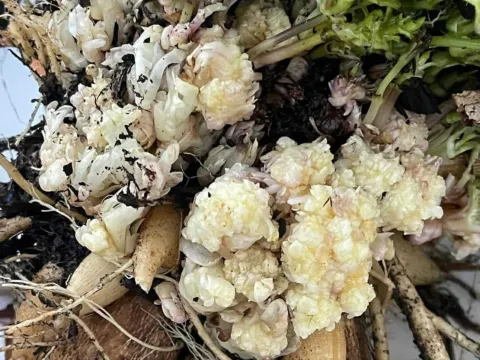
Under humid conditions, bacterial exudate or a thin, whitish film may become visible on the surface of infected stems, representing active bacterial colonies.
Nocardiosis thrives in environments characterized by high humidity and poor soil drainage. Excess moisture is a key driver for the rapid spread of the bacteria.
The optimal temperature range for the proliferation of Nocardiaceae is typically between 20°C and 28°C, which coincides with the active growing season of many crops.
Mechanical injuries to the root system, often caused by improper cultivation or soil-borne pests, significantly facilitate the entry and establishment of the pathogen.
Neutral to slightly alkaline soils can promote the survival and activity of these bacteria, making soil pH management an important aspect of overall farm hygiene.
Dense planting patterns that limit airflow and trap humidity create an ideal microclimate for the development of bacterial outbreaks within the crop canopy.
The primary harm caused by Nocardiosis is the systemic decline of the plant, which often leads to total crop failure if the infection occurs at an early stage.
For crops that reach maturity, the infection results in poor harvest quality, as the fruits or storage organs may become discolored or internally degraded.
The economic impact is significant due to both the direct loss of plants and the increased costs associated with soil remediation and disease management.
Because the pathogen persists in the soil, farmers are often forced to avoid planting susceptible crops for several years, which disrupts standard crop rotation cycles.
Furthermore, the presence of these bacteria increases the vulnerability of plants to other opportunistic pathogens, creating a complex disease scenario in the field.
The most effective strategy for managing Nocardiosis is prevention, which starts with the use of certified, disease-free seed and high-quality transplants.
Implementing a rigorous crop rotation program helps to interrupt the life cycle of the pathogen and prevents its accumulation in the field soil.
Sanitation practices, including the thorough cleaning and disinfection of tools and machinery, are crucial to prevent the spread of the bacteria between different fields.
Biological control agents that compete with the pathogen or produce antagonistic substances can be incorporated into the soil to suppress bacterial growth.
- Maintaining proper soil moisture through efficient irrigation.
- Prompt removal and destruction of infected plant debris.
- Monitoring fields for early signs of wilting or chlorosis.
- Using copper-based or specific bactericidal treatments if permitted.