
European foulbrood
Melissococcus plutonius
The causative agent of this disease is the Gram-positive bacterium Melissococcus plutonius. This highly contagious pathogen specifically targets the open bee brood at the larval stage.
What the section contains
European foulbrood
The bacterium is known for its remarkable persistence in the environment. It can remain viable in combs, honey, and hive surfaces for several years, making it a difficult pathogen to eradicate.
The disease progresses as the bacteria multiply within the gut of the larva, depriving it of essential nutrients. Once the larva dies, it becomes a reservoir for further spreading of the infection.
Often, Melissococcus plutonius infections occur alongside secondary invaders such as Bacillus alvei, which can complicate the diagnosis and worsen the clinical manifestation of the disease.
The transmission within an apiary typically occurs through nurse bees, contaminated equipment, or the practice of moving brood combs between healthy and infested colonies.
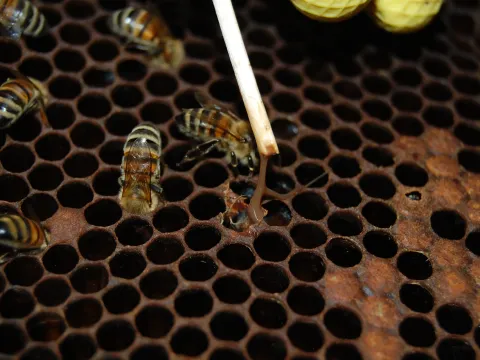
The most distinctive sign of the disease is a patchy brood pattern, where the uniform coverage of capped and open cells is interrupted by dead or dying larvae.
Healthy larvae are pearly white and curled into a C-shape. In contrast, infected larvae shift from their position, becoming stretched or slumped against the bottom wall of the cell.
The color of the infected larva changes from pearl white to yellow and eventually to a dark brown, as the tissues begin to break down and rot.
As the disease advances, the dead larva dries out, forming a rubbery or tough scale that can be easily removed from the cell wall without leaving a trace.
- Irregular brood pattern in the honeycomb.
- Larvae shifting from their normal C-shape position.
- Discoloration of the brood from white to yellow/brown.
- Sour or putrid smell emanating from the hive.
- Formation of easily removable, dry larval scales.
European foulbrood typically peaks during the spring season when colonies are rapidly expanding but remain vulnerable to temperature fluctuations and food shortages.
Colonies experiencing nutritional stress or those with an insufficient population of nurse bees are significantly more prone to the spread of the infection.
High humidity within the hive and poor ventilation create an ideal microclimate for the rapid proliferation of Melissococcus plutonius bacteria.
Lack of hygiene practices, such as failing to disinfect used equipment or reusing old, dirty combs, significantly increases the likelihood of an outbreak.
Secondary stressors, including pesticide exposure or heavy infestations of Varroa destructor mites, weaken the immune system of the bees and facilitate the disease.
European foulbrood is economically devastating as it causes significant brood loss, directly leading to a decline in the overall workforce of the colony.
Affected colonies fail to reach their full potential, which prevents them from building up enough strength to participate effectively in the honey harvest.
Nurse bees must spend excessive energy and time cleaning the dead larvae from the cells rather than foraging, which further exhausts the colony and reduces efficiency.
If not contained through strict quarantine measures, the infection spreads throughout the entire apiary, potentially leading to the destruction of multiple hives.
The recovery process requires extensive labor for cleaning, equipment disinfection, and financial investments in medical treatments to restore colony health.
The primary control measure is the early detection and immediate isolation of infested colonies to prevent the pathogen from spreading to healthy hives.
Veterinary-approved antibiotics are often used, administered via sugar syrup or supplemental feed, strictly following local regulations and dosage instructions.
Sanitation is paramount: this includes thorough disinfection of hive components, burning or melting heavily infested combs, and sanitizing all beekeeping tools.
Strengthening the colony is essential; providing supplemental feeding, ensuring adequate hive insulation, and replacing the queen with a more prolific one can help the colony recover.
Prevention relies on good apiary management: keeping colonies strong, regularly renewing the comb supply, maintaining equipment hygiene, and monitoring for parasites.