
Fire blight
Lactobacillus amylovorus
The causative agent of fire blight is the gram-negative bacterium Erwinia amylovora. It is a member of the Enterobacteriaceae family and is considered one of the most destructive quarantine plant pathogens worldwide.
What the section contains
Fire blight
This bacterium affects over 200 species of plants, primarily within the Rosaceae family. It colonizes the intercellular spaces of plant tissues, producing specific toxins that lead to rapid cell death.
The pathogen overwinters in dormant cankers on the branches or trunks of infected trees. As temperatures rise in spring, the bacteria become active, producing a bacterial ooze that initiates new infections.
Transmission occurs through various vectors, including pollinating insects, wind-blown rain, birds, and contaminated pruning tools used in routine orchard maintenance.
The bacteria exploit natural openings such as nectaries and stomata, as well as wounds caused by hail, insects, or mechanical damage, to enter the plant's vascular system.
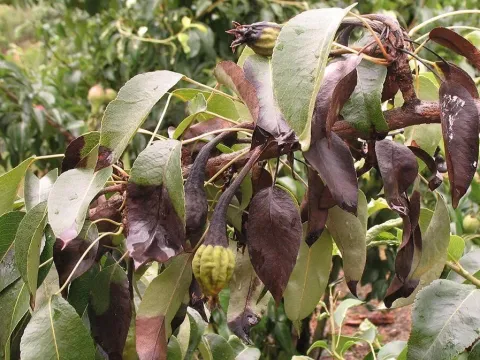
The earliest symptom in spring is the sudden wilting and blackening of blossoms, which often appear as if they have been scorched by fire, hence the common name of the disease.
Infected shoots and twigs exhibit a characteristic drooping at the tip, commonly referred to as the shepherd's crook. The tissue turns black, becomes brittle, and eventually dies.
Foliage on affected branches shows dark, necrotic lesions along the veins. The leaves eventually curl and turn dark brown or black but typically remain attached to the tree.
Under high humidity, a distinctive bacterial ooze appears on the surface of branches, fruit, and bark. This liquid is sticky and ranges in color from milky white to amber.
Fruit that becomes infected shrivels, turns black, and often remains mummified on the tree, serving as a critical reservoir for the pathogen to spread during the following season.
Fire blight development is strongly favored by warm weather, typically between 18°C and 25°C, accompanied by high relative humidity and frequent rainfall or heavy dew.
Periods of wet weather during the bloom phase create optimal conditions for the bacteria to multiply rapidly within floral tissues, leading to severe primary infections.
Hailstorms during the growing season significantly increase the risk of infection by creating widespread wounds on the bark, providing immediate entry points for the pathogen.
Excessive nitrogen fertilization promotes vigorous, succulent growth, which is significantly more susceptible to bacterial colonization and rapid systemic movement of the infection.
The activity of insects visiting flowers during periods of high humidity accelerates the secondary spread of the bacteria within the orchard, leading to explosive outbreaks.
Fire blight is extremely destructive and can cause the death of entire orchards if not managed properly. The infection can move systemically through the tree, reaching the main trunk and killing the tree entirely.
The disease causes total loss of blossoms and fruit set, resulting in immediate and significant yield reductions for the affected season.
The presence of fire blight necessitates strict quarantine measures, which often prevent growers from selling fruit or nursery stock, leading to severe economic consequences.
Because systemic infections move rapidly, the disease is notoriously difficult to control, and heavily infected trees often must be removed and destroyed to save the rest of the orchard.
The cost of managing fire blight, including labor for pruning, sanitation, and chemical applications, represents a significant burden for commercial fruit producers.
Effective management begins with prevention, including the selection of resistant cultivars and the implementation of strict sanitation practices to keep the orchard disease-free.
Regular pruning is essential. When removing infected branches, cuts must be made at least 20-30 cm below the visible symptoms, and tools must be sterilized with alcohol between every single cut.
Copper-based sprays applied during the green tip stage and bloom can provide a protective barrier and help suppress bacterial populations on the plant surface.
Controlling insect pests, such as aphids and leafhoppers, is a vital component of integrated pest management, as these insects can transport the pathogen between trees.
- Planting resistant rootstocks and varieties.
- Monitoring the orchard closely during bloom.
- Proper disposal and burning of pruned infected material.
- Balanced fertilization to avoid over-succulent growth.
- Applying biological control agents in accordance with local guidelines.