
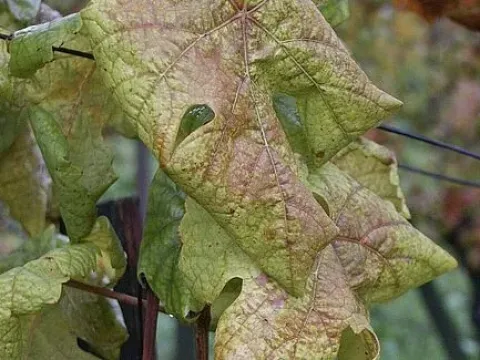
Flavescence dorée
German flavescence
Flavescence dorée is caused by a specialized phytoplasma, Grapevine flavescence dorée phytoplasma, which colonizes the phloem tissues of the vine.
What the section contains
Flavescence dorée
The primary vector responsible for spreading the pathogen in vineyards is the Nearctic leafhopper Scaphoideus titanus. Once the insect feeds on an infected vine, it remains a vector for the rest of its life.
Phytoplasmas are bacteria-like organisms without a cell wall, making them extremely difficult to eradicate once they have colonized the host plant.
The infection severely disrupts the plant's vascular system, blocking the translocation of photosynthates from the leaves to the roots and developing clusters.
Since the pathogen is systemic, it spreads throughout the entire plant, making pruning an ineffective solution for infected vines.
The first signs appear in early summer, characterized by the downward curling of leaves which take on a stiff, triangular shape.
Foliar discoloration is a key symptom: white grape varieties exhibit yellowing, while red varieties show distinct reddish or purplish discoloration.
A major diagnostic feature is the failure of new shoots to lignify (harden) by autumn, leaving them green, rubbery, and highly susceptible to winter frost damage.
Flowers and grape clusters often wither and drop off. Any remaining berries typically show poor ripening, low sugar content, and a sour taste.
- Yellowing or reddening of the leaves.
- Triangular curling of leaf blades.
- Poor lignification of shoots.
- Withered inflorescences and berry drop.
- Systemic decline and death of the vine.
The spread of the disease is strictly correlated with the lifecycle of the leafhopper Scaphoideus titanus, which produces one generation per year.
Warm spring and summer temperatures are optimal for the development and mobility of the leafhopper, leading to higher infection rates in the vineyard.
The disease is introduced into new areas primarily through the movement of infected vegetative propagating material, such as cuttings or nursery plants.
High population densities of the vector on abandoned or poorly maintained neighboring vineyards serve as a constant source of infection for commercial blocks.
The intensity of the spread depends on the timing of insecticide applications directed at controlling the nymph and adult stages of the vector.
Flavescence dorée is classified as one of the most devastating diseases affecting viticulture, causing significant economic losses worldwide.
Once established in a vineyard, the disease can lead to the rapid decline and death of plants, forcing growers to remove entire vine blocks.
The loss of crop production is absolute on infected vines, as both the quality and quantity of berries are severely compromised.
The disease causes long-term damage to the vineyard's structure, reducing its productive lifespan and investment value.
The systemic nature of the pathogen makes infected vines a permanent danger to surrounding healthy plants, requiring rigorous quarantine measures.
The most effective strategy is the use of healthy, certified virus-free nursery stock to prevent the initial introduction of the pathogen.
Insecticide programs targeting the leafhopper vector Scaphoideus titanus are essential to minimize the secondary spread within the vineyard.
Strict monitoring and the mandatory roguing (removal and destruction) of all symptomatic vines are critical to limit the source of inoculum.
Implementing a perimeter buffer zone and maintaining clean cultivation practices around the vineyard help reduce the presence of alternative hosts for the vector.
Regional cooperation between growers is necessary to manage the vector population and comply with mandatory quarantine regulations to stop the disease's expansion.