
European foulbrood
Melissococcus
Description
Symptoms
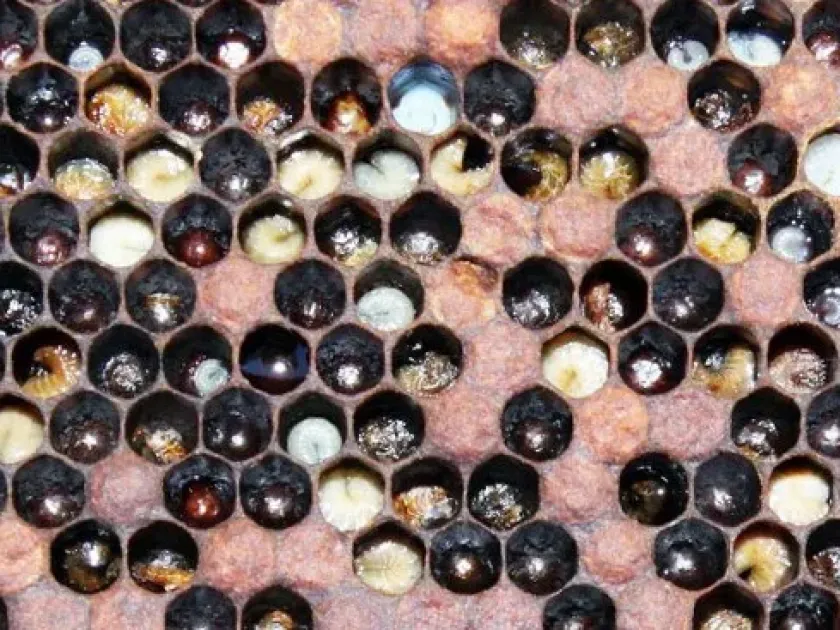
The most evident sign is the death of larvae before they are capped, leading to an irregular, spotty brood pattern within the hive.
Healthy, pearly-white larvae turn yellow or brown, and their bodies often become twisted or misplaced within the honeycomb cell.
As the tissue decomposes, a sour, foul odor becomes noticeable near the infected frames, especially during humid weather conditions.
Dead larvae usually dry up into rubbery, brown scales that are relatively easy for bees to remove, unlike the tenacious scales of American foulbrood.
- Yellowish or brownish color of the larva
- Twisted, unnatural larval position
- Spotty brood pattern
- Sour smell from the hive
Pathogen
The causative agent of European foulbrood is the bacterium Melissococcus plutonius, which primarily infects honey bee larvae in the midgut.
This gram-positive bacterium is highly contagious and thrives in the larval gut, consuming nutrients and competing with the host's microbiota.
The pathogen is known for its extreme resilience, capable of surviving in the environment, on combs, and inside hive boxes for several years.
While Melissococcus plutonius is the primary agent, secondary invaders like Bacillus alvei often complicate the pathology of the disease.
Transmission occurs through contaminated feed, drifting nurse bees, and the usage of shared beekeeping equipment without proper disinfection.
Conditions for development
The disease frequently breaks out in spring when colonies are stressed by rapid expansion or fluctuating environmental temperatures.
Poor nutritional status, such as a shortage of fresh pollen and nectar, significantly lowers the resistance of developing brood to bacterial infection.
Overcrowded hives with poor ventilation contribute to the proliferation of the bacteria and the rapid spread of the disease within the apiary.
The presence of old, contaminated combs serves as a major reservoir for Melissococcus plutonius spores and bacteria.
Weak colony strength, often caused by poor queen performance or Varroa mite infestations, makes the bees more vulnerable to outbreaks.
Why it matters
European foulbrood causes severe damage to colony development, often resulting in a drastic decline in the population of worker bees.
Colonies infected with the disease exhibit reduced foraging activity, leading to lower honey production and poor pollination efficiency.
If left unmanaged, the infection can rapidly spread throughout the entire apiary, resulting in significant economic losses for the beekeeper.
The disease drains the colony's resources, as nurse bees spend excessive time cleaning out dead larvae instead of nursing healthy brood.
Chronic infections lead to weakened colonies that are less likely to survive the winter and more susceptible to other diseases and parasites.
Protection
Effective control requires strict sanitation, including the sterilization of tools and the removal of heavily infected frames for incineration.
Beekeepers often use antibiotics to suppress the bacterial population, strictly adhering to labels to prevent contamination of honey supplies.
Requeening the colony with a young, vigorous queen from a resistant strain is highly recommended to improve natural disease resistance.
Providing supplementary feeding and ensuring optimal hive conditions helps the bees maintain a strong immune response against the pathogen.
Regular monitoring of the brood and isolating suspected colonies prevents the uncontrolled spread of the bacteria within the apiary.
Discussion
No discussions yet — be the first.