
Vitavax 200 FF
Crompton (Uniroyal Chemical) Registration Limited
Fungicides
1
0
18 offers
5.33 €per 1 l
Buy

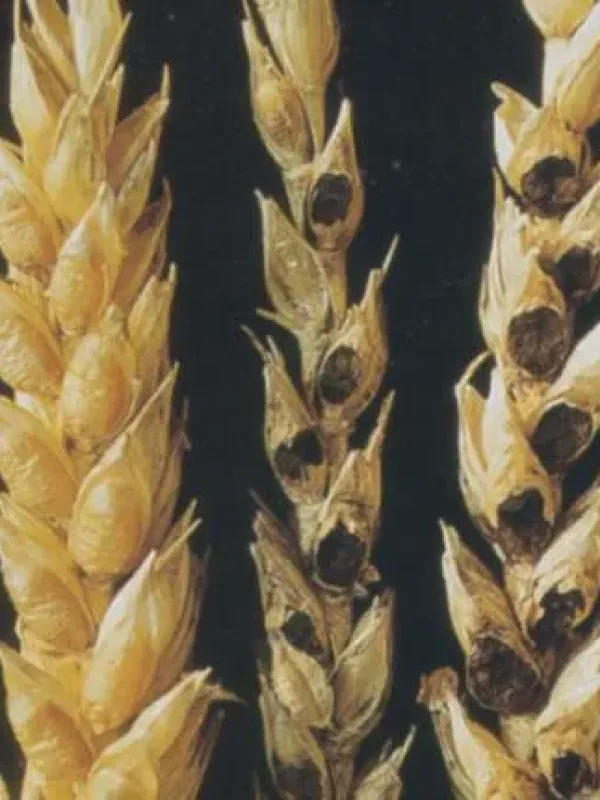
Symptoms are rarely apparent until the crop approaches maturity. Infected plants may appear slightly stunted, with ears that often remain green longer than healthy ones and have a slightly different morphology.
The most distinctive sign is the appearance of bunt balls instead of healthy grains. These balls are roughly the size and shape of wheat kernels but are greyish-brown and have a fragile, papery outer skin.
When crushed, these bunt balls release a dark, powdery mass of spores. This material has a very strong, distinct odor of rotting fish, which is due to the chemical trimethylamine.
The heads of infected plants may appear more open or "loose" than healthy ones because the bunt balls push the glumes apart, revealing the internal discoloration of the spikelet.
In many cases, an entire head can be affected, although sometimes only parts of the spikelet show signs of the disease, depending on the severity of the initial infection.
Common bunt, also known as stinking smut, is caused by the fungus Tilletia caries (or Tilletia tritici). It is a significant disease affecting wheat crops worldwide, capable of causing substantial yield losses.
The fungus infects wheat at the seedling stage. Teliospores, which persist on the seed surface or in the soil, germinate and infect the coleoptile of the developing plant before it emerges from the ground.
Once inside, the fungus grows systemically within the plant, moving up to the growing point without causing visible damage during the vegetative stage. The mycelium remains hidden until the wheat begins to head.
At the flowering stage, the fungus invades the developing ovaries. The grain tissues are replaced by a black, powdery mass of teliospores, effectively creating a "bunt ball" where the kernel should have been.
These spores are highly resilient and can remain viable in the soil for several years, making the management of the pathogen a persistent challenge for farmers.
Cool and moist soil conditions at the time of planting are the most critical factors for successful infection. Temperatures ranging from 5°C to 12°C are ideal for the germination of teliospores.
The speed of seedling emergence is crucial; if the seed is planted too deep, the seedling spends more time in the critical "window of susceptibility," increasing the likelihood of infection.
Soil pH and moisture levels also influence the survival and germination rate of the spores. Moist soils help maintain the viability of the inoculum over the winter months.
The presence of large amounts of spores in the soil, often resulting from previous years of planting infected seed or poor rotation, significantly increases the risk of an outbreak.
Any agricultural practice that slows down plant growth or extends the emergence period will increase the risk of the fungus colonizing the host tissue before it reaches the surface.
The primary damage caused by common bunt is a direct reduction in grain yield, as every infected kernel is entirely replaced by fungal spores, resulting in 100% loss for those specific grains.
Grain quality is severely compromised. During the harvest, the bunt balls break, and the spores coat the healthy grains, contaminating the entire batch and rendering it unsuitable for the market.
Flour produced from contaminated grain is dark in color, has poor baking properties, and carries the foul fishy odor, making it completely unacceptable for human consumption.
The presence of high levels of spores can also lead to toxic effects in livestock if fed improperly processed grain, causing digestive issues and reducing the overall value of the farm's output.
Economic losses are compounded by the need for specialized cleaning equipment to remove spores from grain, as well as the cost of decontamination of storage silos and machinery.
Seed treatment is the most effective and primary control strategy. Systemic fungicides applied to the seed surface kill spores and protect the vulnerable coleoptile during the critical emergence phase.
Using certified, disease-free seed is essential to prevent the introduction of the pathogen into fields that are currently clear of the fungus.
Optimizing the sowing depth and timing helps ensure rapid seedling emergence, which minimizes the time the plant is vulnerable to infection by soil-borne spores.
Developing and planting resistant wheat varieties remains the most sustainable approach, effectively removing the need for intensive chemical applications in many agricultural regions.





No discussions yet — be the first.