
Description
Symptoms
The primary symptom of this disease is the visible damage to the reproductive organs of the strawberry plant. Affected stamens and pistils darken and die, which prevents successful pollination and subsequent fruit development.
The flowers often turn brown, and the petals wither prematurely. Flower stalks may bend downwards, and in severe cases, the entire inflorescence dries out, appearing similar to frost damage.
When examined closely under magnification, a faint grayish or white fungal mycelium may be observed on the infected flower parts. This infection spreads rapidly within the cluster as the disease progresses.
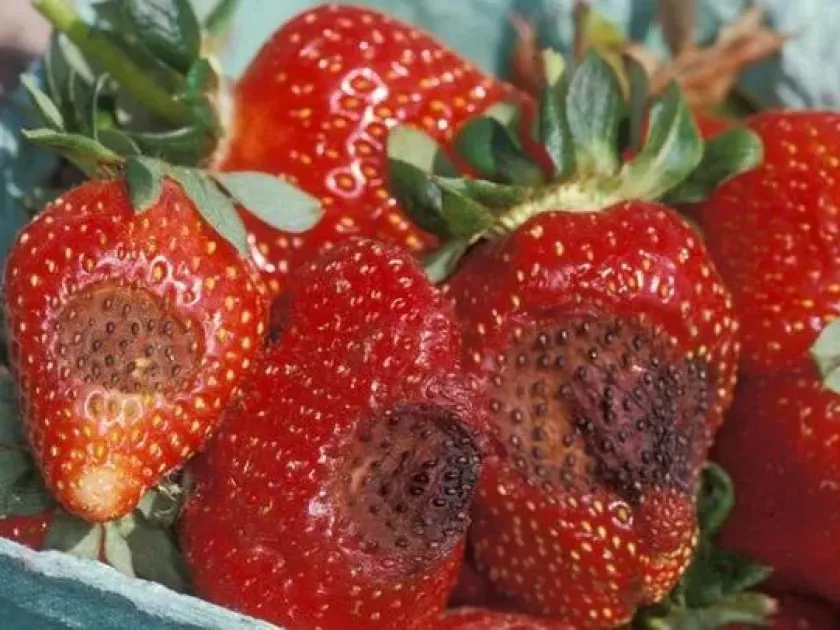
The development of the disease frequently leads to malformed fruit. If a berry does develop, it is often underdeveloped, small, and exhibits necrotic spots on the surface, which ruins its commercial value.
Infection is often localized, affecting only specific flowers within a cluster, which is a key diagnostic characteristic when scouting fields for the disease.
Pathogen
The disease is caused by a fungus in the genus Ceratobasidium. This pathogen belongs to the basidiomycete group and is specifically adapted to infect the floral tissues of strawberry plants during the blooming phase.
The fungus survives in the soil and on plant debris as mycelium or sclerotia, allowing it to persist throughout the winter months. As spring conditions improve, the pathogen reactivates.
Dissemination occurs through the movement of basidiospores via rainwater, irrigation splashing, and wind currents. This allows the disease to spread rapidly across strawberry fields.
The pathogen demonstrates high aggressiveness toward floral tissues, utilizing them as a primary nutrient source during the critical reproductive window of the crop.
The biology of the pathogen is highly dependent on humidity, as free moisture on the flower surface is required for the spores to germinate and infect the tissue.
Conditions for development
High relative humidity is the most critical environmental factor for disease development. Persistent rainfall during the strawberry flowering period creates ideal conditions for Ceratobasidium infection.
The optimal temperature range for the pathogen's development is between 15 and 22 degrees Celsius. Within this range, the incubation period is significantly shortened.
High-density planting restricts airflow between plants, causing moisture to accumulate within the canopy and creating a microclimate that strongly favors the spread of the fungus.
Poor soil drainage and excessive nitrogen fertilizer application, which leads to overly dense foliage, further increase the risk of an outbreak by trapping humidity around the inflorescences.
Continuous cropping and the use of highly susceptible cultivars over many years contribute to the accumulation of high levels of inoculum in the soil.
Why it matters
The most significant impact of the disease is a substantial reduction in total yield. The death of the essential reproductive organs results in failure to set fruit, leading to major production losses.
In years with heavy spring rainfall, the disease can destroy 50-80% of the potential harvest, making the cultivation of susceptible strawberry varieties economically unviable in certain regions.
Infection weakens the overall health of the strawberry plant, reducing its vigor and increasing its vulnerability to secondary pathogens and other environmental stressors throughout the growing season.
The marketability of the remaining berries is significantly compromised, as malformations and necrotic blemishes make the fruit unsuitable for fresh market sales.
Rapid spread across the field requires immediate intervention, which increases the management costs associated with applying protective measures and labor.
Protection
Prevention is the foundation of management, including the use of appropriate planting patterns to ensure adequate air circulation throughout the strawberry canopy.
It is essential to remove and destroy infected plant debris, as this serves as a critical reservoir for the pathogen during the off-season.
When environmental conditions favor disease, the application of systemic fungicides labeled for strawberry use may be necessary, provided that pre-harvest intervals are strictly followed.
Using healthy, certified disease-free nursery stock is vital to preventing the introduction of the pathogen when establishing new strawberry plantations.
Growers should prioritize the use of resistant cultivars and implement soil mulching techniques to physically separate flowers from moist soil surfaces, thereby reducing infection risk.
Pathogens and affected parts
Affects crops · 1
Discussion
No discussions yet — be the first.