
Powdery mildew of roses
Sphaerotheca pannosa
Description
Symptoms
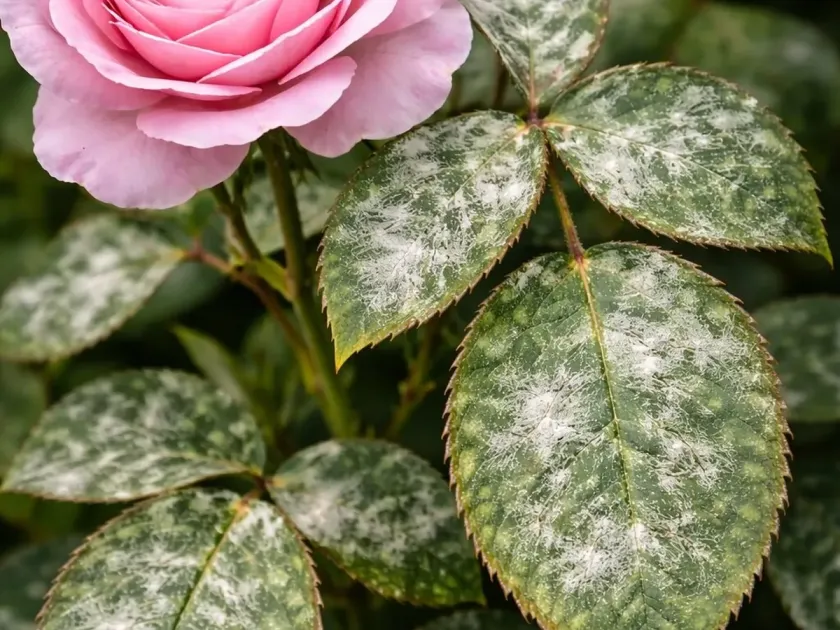
The initial sign of infection is the appearance of white or grayish powdery spots on leaves, stems, and young shoots. At early stages, these spots can be easily wiped away, but the fungus soon penetrates deeper into the plant tissue.
Deformation of plant organs is a characteristic symptom. Affected leaves curl, become brittle, and drop prematurely, while young shoots often become distorted and show stunted growth patterns.
Rose buds are also highly susceptible to the fungus. If heavily infected, they may fail to open, and the petals may become covered in mildew, leading to discoloration, aesthetic damage, and necrosis.
By mid-season, the white coating often darkens to a grayish-brown color. During this period, tiny black dots—the fungal fruiting bodies (cleistothecia)—become visible within the mycelium, signaling the preparation for overwintering.
Overall, the plant appears weakened, loses the intensity of its foliage color, and significantly reduces the formation of new flower buds, resulting in sparse or aborted flowering.
Pathogen
The causative agent of this disease is the ascomycete fungus Sphaerotheca pannosa var. rosae. It is an obligate parasite that relies entirely on living plant tissues for nutrients, absorbing them through specialized structures called haustoria.
The fungus overwinters primarily as mycelium within the buds of infected shoots or as cleistothecia in plant debris. In the spring, the infection activates by producing conidia, which are then dispersed by wind, rain splashes, or insects to healthy tissues.
This pathogen affects almost all rose varieties, including hybrid teas, floribundas, and climbing roses. Young, actively growing shoots and tender flower buds are particularly susceptible due to their high carbohydrate content.
The fungal mycelium develops on the surface, covering tissues with a white, powdery, web-like coating. Over time, this coating thickens as the fungus produces more spores for secondary infections.
The biology of the pathogen allows it to produce several generations during a single growing season, leading to a rapid spread of the infection throughout the rose bushes under favourable environmental conditions.
Conditions for development
The primary factor for disease development is fluctuating temperatures between day and night. The ideal conditions for spore germination are nighttime temperatures dropping to +15... +18°C with warmer daytime weather.
High relative humidity, ranging between 60% and 80%, facilitates spore germination on the leaf epidermis. Overhead irrigation only exacerbates this by creating a humid microclimate within the rose canopy.
Poor ventilation in rose gardens, often caused by overly dense planting, leads to stagnant air. This prevents leaves from drying quickly, providing the perfect environment for mycelium proliferation.
Excessive nitrogen fertilization promotes the growth of soft, succulent tissues that are highly vulnerable to fungal penetration. Conversely, a deficiency in potassium and phosphorus weakens the plant's natural immune system.
Lack of sufficient sunlight and shaded areas delay the evaporation of morning dew, keeping the foliage damp for longer periods and creating the necessary moisture for rapid pathogen colonization.
Why it matters
Powdery mildew significantly reduces the photosynthetic activity of rose leaves. The fungal coating blocks sunlight from reaching chlorophyll cells, preventing the plant from producing enough energy for healthy growth.
Damage to stems disrupts the normal flow of water and nutrients. In severe cases, the fungal mycelium can cause necrosis of the cambium layer, often leading to the death of individual branches or the entire bush during winter.
The aesthetic value of the rose garden is lost. Due to deformed buds and premature leaf drop, the bushes become unattractive for landscaping, and the flowers are unsuitable for bouquets or decoration.
Heavy infestation weakens the plant's immune system, making it susceptible to secondary infections such as rust or black spot, which significantly complicates the overall disease management.
If left uncontrolled, the disease progresses annually, accumulating a large inoculum reservoir in the soil and plant debris, making it nearly impossible to grow healthy roses in the same location.
Protection
Prevention begins with proper site selection and spacing to ensure adequate air circulation. It is also crucial to prioritize planting rose varieties known for their genetic resistance to powdery mildew.
Regular sanitation is essential: prune and destroy infected plant parts promptly. All fallen leaves must be removed and burned at the end of the season to prevent the infection from carrying over to the next year.
Balanced nutrition is key to maintaining rose health. Applying potassium-phosphorus fertilizers strengthens cell walls, making them more resistant to fungal penetration.
For treatment and protection, use systemic and contact fungicides. Sulfur-based products are effective, as are modern systemic agents from the triazole and strobilurin classes.
Applications should be made at 7–14 day intervals, alternating between different classes of chemicals to prevent the development of resistance. Ensure thorough coverage of both the top and bottom sides of the leaves.
Discussion
No discussions yet — be the first.