
Powdery mildew of cucurbits
Sphaerotheca fusca
Description
Symptoms
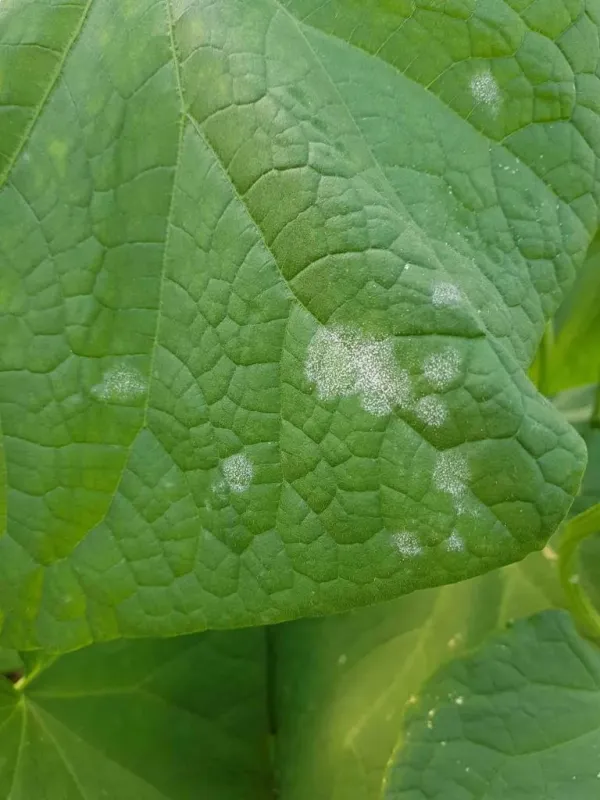
The primary symptom is the appearance of small, white, powdery spots on the upper side of the leaves. These spots resemble dusting of flour and can easily be wiped off initially.
As the disease progresses, these spots expand and coalesce until the entire leaf surface is covered. The leaves eventually turn yellow, become brittle, and undergo necrosis.
The infection eventually spreads to stems and petioles. In severe cases, the white mycelium can be observed on fruits, causing discoloration and stunting.
The plant loses its photosynthetic capacity as leaves curl and dry out. This premature senescence stops plant growth and fruit development significantly.
- White powdery patches on leaves.
- Merging of lesions over the leaf surface.
- Leaf chlorosis and eventual necrosis.
- Stunted plant growth and shriveling.
- Deformed fruits with poor quality.
Pathogen
The causal agent of this disease is the fungus Sphaerotheca fusca. This obligate parasite thrives by extracting nutrients directly from the host plant's cells using specialized hyphae.
It affects a broad range of crops in the Cucurbitaceae family, including cucumbers, squashes, pumpkins, melons, and watermelons. The pathogen is highly active in both greenhouse conditions and open fields.
The fungus reproduces primarily through conidia, which are easily dispersed by wind, insects, or manual contact. In favorable climates, the pathogen survives as dormant mycelium on crop debris.
Infection begins when spores land on the leaf surface and germinate, eventually forming a white, felt-like mycelium cover. This growth disrupts the plant's metabolic processes.
The pathogen is highly aggressive under optimal environmental conditions, allowing it to rapidly colonize entire plantations if preventive measures are neglected.
Conditions for development
Development of the fungus is favored by warm temperatures ranging between 18°C and 25°C. High humidity levels are crucial for the efficient germination of conidia.
Poor ventilation, especially in greenhouses, creates stagnant air pockets with high humidity. This environment is ideal for the fungus to establish itself and spread across the canopy.
Excessive nitrogen fertilization promotes lush, succulent growth that is highly susceptible to fungal invasion. Simultaneously, a lack of potassium weakens the plant's cell walls.
Environmental stress, such as water deficit or shading, reduces the plant's innate immunity. These conditions significantly lower the threshold for a successful infection.
Rapid fluctuations in day and night temperatures can also trigger the disease, as they often lead to moisture condensation on leaf surfaces, which supports spore growth.
Why it matters
The major impact is the drastic reduction of photosynthesis. The white mycelial layer blocks sunlight, starving the plant of the energy required for fruit production and development.
Leaves prematurely wither and fall, exposing fruits to direct sunlight. This causes sunscald and negatively affects both the marketability and the shelf life of the harvest.
Severe infestations result in significant yield losses. Fruits harvested from infected plants are often small, deformed, and have low sugar content, rendering them unsuitable for consumption.
The overall health of the plant is compromised, making it prone to secondary infections from other pathogens, which accelerates the final decline of the crop.
If not managed early, the disease can lead to total crop failure within a short period, especially in environments where humidity control is difficult.
Protection
Preventive measures include strict sanitation practices, such as removing and destroying all crop residues after the harvest to eliminate overwintering sources.
Selecting disease-resistant or tolerant cultivars is the most effective long-term strategy for managing this disease in commercial and home farming.
Proper agronomic management is essential, including maintaining adequate spacing between plants to ensure good airflow and regulating fertilization to avoid excess nitrogen.
Chemical control involves the use of systemic fungicides. It is crucial to monitor the field regularly and apply treatments at the very first signs of disease, alternating active ingredients to prevent resistance.
Biological control agents, such as specific strains of Bacillus subtilis or Trichoderma, can be used to manage early infections and provide a sustainable shield for the plants.
Discussion
No discussions yet — be the first.