
Protists
Protista
Description
Symptoms
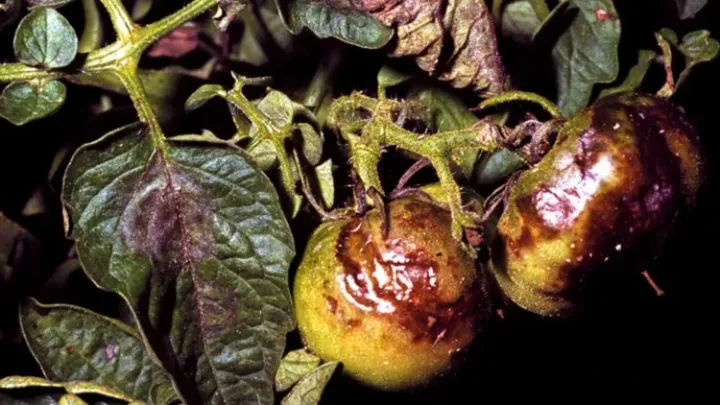
Symptoms often start as localized chlorosis or water-soaked spots on leaves. As the infection progresses, these areas become necrotic and may develop a visible powdery or fuzzy sporulation layer.
Root-infecting protists often cause distinctive morphological changes, such as the formation of massive galls, nodules, or root rot, which severely impair the plant's nutrient and water uptake.
Systemic weakness is common, often characterized by premature wilting, yellowing of foliage, and significant stunting of the overall plant architecture.
In fruits and tubers, the infection often presents as firm to soft rot, frequently leading to the rapid decay of the tissue and rendering the produce unmarketable.
Under heavy infestation, entire plant clusters may collapse, leading to visible patches of dead or dying crops within the field.
Pathogen
In agronomy, the term Protista refers to a diverse group of eukaryotic microorganisms that includes highly damaging plant pathogens such as Oomycetes and Plasmodiophorids. Although they are not true fungi, they exhibit similar growth patterns and disease symptoms.
Notable examples include Phytophthora infestans, the agent of late blight, and Plasmodiophora brassicae, which causes clubroot. These organisms are highly adaptive and possess complex survival strategies.
A key biological trait is the production of zoospores, which are motile spores equipped with flagella. This motility allows them to navigate water films in the soil and on leaf surfaces to reach host tissues.
Protists can persist in the soil for several years by forming resilient resting structures like oospores, which allow the pathogen to survive harsh winters and prolonged dry periods.
Infection is initiated when these spores contact the host, typically entering through the roots or stomata, followed by the enzymatic degradation of host cells.
Conditions for development
The development of diseases caused by protists is strictly dependent on moisture availability. Rain, high humidity, and prolonged morning dew are the primary catalysts for infection.
Most of these pathogens thrive within a temperature range of 15°C to 22°C. High temperatures often inhibit the activity of zoospores but may favor the survival of resting stages.
Poor air circulation, excessive plant density, and high soil moisture levels create an ideal microclimate for the rapid transition of the pathogen from the soil to the host.
Soil chemical properties, particularly pH, significantly influence the prevalence of certain protists; for instance, acidic soils are known to accelerate the development of clubroot.
Continuously cropping susceptible plants on the same site allows for a massive buildup of inoculum, making subsequent seasons increasingly difficult to manage.
Why it matters
The economic impact of protist-induced diseases is substantial, often causing yield reductions of 50% or more under favorable disease conditions.
Beyond quantity, the quality of the harvested produce is severely degraded, making it unsuitable for storage, processing, or fresh market sales.
The necessity for frequent fungicide applications increases the total production costs for farmers and poses challenges for sustainable pest management.
Root-damaged plants become highly susceptible to secondary invaders, including bacteria and other fungi, which complicate diagnosis and treatment.
Large-scale crop failures due to outbreaks lead to significant losses in farm revenue and can force growers to abandon specific crops in infected fields.
Protection
Effective management requires an integrated pest management (IPM) strategy that prioritizes environmental control and preventative measures over curative actions.
Key control strategies include:
- Strict adherence to crop rotation intervals to starve soil-borne pathogens.
- The use of certified disease-free seeds and resistant or tolerant crop varieties.
- Proper soil management, such as increasing pH through liming to suppress certain pathogens.
- Application of specialized fungicides at critical developmental stages to prevent infection.
- Rigorous sanitation, including the destruction of crop debris and sterilization of tools and greenhouses.
Discussion
No discussions yet — be the first.