
Soft rot bacteriosis
Proteus
Description
Symptoms
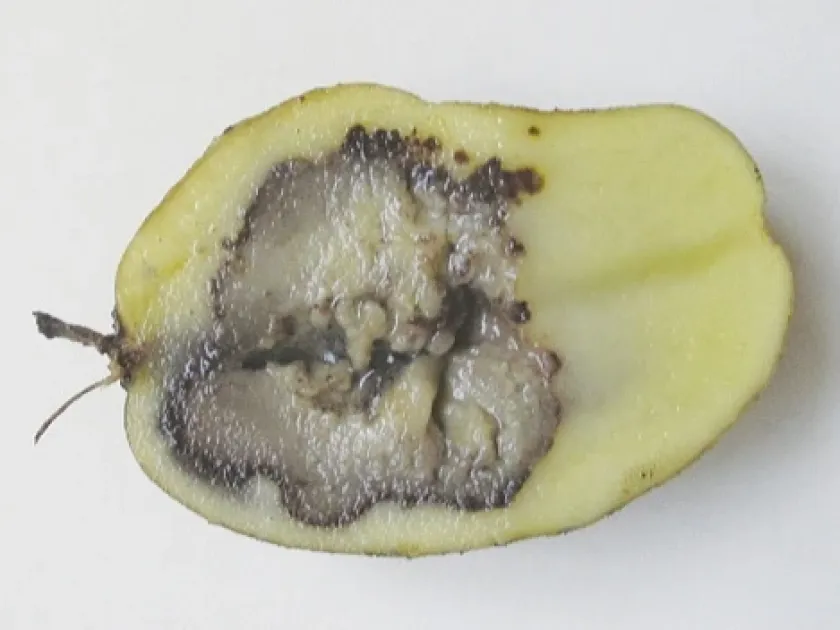
The primary symptom is soft rot, characterized by the softening of tissues and their transformation into a shapeless, slimy mass. The process is frequently accompanied by a foul, specific odor typical of the metabolic activity of these bacteria.
In the early stages, watery, slightly depressed spots appear on the surface of fruits or root crops, which rapidly increase in size. In conditions of high humidity, the surface of the affected areas becomes covered with a cloudy exudate.
Internal tissues of the plant, when cut, show rapid parenchyma destruction, while vascular bundles may retain their shape longer than surrounding tissues, creating a "slumping" effect of the soft mass.
When bulbs or tubers are affected, the rot rapidly penetrates deep into the plant, causing complete destruction of the marketable portion of the harvest during storage or the growing season.
- Darkening of tissues in the affected areas.
- Rapid destruction of cell structure.
- Emission of slimy exudate with an unpleasant odor.
Pathogen
The causative agents of this pathology are facultative anaerobic bacteria of the genus Proteus (most commonly Proteus vulgaris). These are Gram-negative rod-shaped microorganisms that typically inhabit soil and sewage but can adopt a parasitic lifestyle when plant tissue integrity is compromised.
The bacteria are characterized by high motility due to peritrichous flagella, which allow them to move rapidly in capillary water. They possess enzymatic activity capable of breaking down the pectin substances in cell walls.
In a phytopathological context, Proteus bacteria often act as a secondary infection that complicates primary bacteriosis, although they are capable of causing independent disease outbreaks under favorable conditions.
These microorganisms are able to maintain viability for long periods in plant residues, humus, and soil, making them persistent pathogens in both protected and open field conditions.
Succulent plant parts are primarily susceptible: root crops, tubers, bulbs, and fruits of vegetables such as tomatoes, potatoes, cucumbers, and cabbage.
Conditions for development
High air humidity (over 80%) and waterlogged soil, which creates anaerobic conditions in the root zone, favor the development of the disease. The bacteria actively multiply at temperatures between +20°C and +30°C.
Mechanical tissue damage acts as a "gateway" for infection. Entry points include cracks, harvesting cuts, and injuries caused by pests such as wireworms or mole crickets.
Lack of crop rotation and the application of excessive nitrogen fertilizers, which reduce the strength of cell walls, significantly increase the risk of epiphytotics.
Poor ventilation in greenhouses creates localized zones of stagnant air where water droplets facilitate the spread of bacteria from infected to healthy plants.
Improper storage conditions, such as high temperatures in warehouses and condensation on produce, lead to a rapid spread of rot within vegetable piles.
Why it matters
Bacteriosis caused by Proteus poses a significant threat to agriculture, as it can destroy a substantial portion of the harvest in fields and warehouses in a short period of time.
The pathogen affects the marketable portion of the produce, rendering it completely unsuitable for sale or consumption due to tissue degradation and toxic bacterial metabolic products.
The high speed of infection spread in storage conditions means that a single rot outbreak can ruin up to 50-80% of produce in a specific container if sorting is not performed promptly.
The disease leads to economic losses not only due to crop destruction but also because of the costs associated with additional protective measures and cleaning areas of contaminated plant residues.
Contaminated fields become a source of pathogens for subsequent years, limiting the choice of crops for rotation.
Protection
The primary preventive measure is strict adherence to crop rotation, excluding the cultivation of susceptible crops in the same area for more than two consecutive years, as well as spatial isolation from infected plots.
It is essential to provide optimal soil drainage to prevent water stagnation and to implement timely control of soil pests that damage the root system.
During harvest, it is necessary to avoid mechanical damage to vegetables and root crops. Produce must be thoroughly dried before being placed into long-term storage.
The use of resistant varieties and hybrids is the most effective biological method to limit the damage caused by bacteriosis.
When outbreaks are detected in greenhouses or warehouses, it is necessary to disinfect facilities and containers using specialized antiseptic agents authorized for use in agriculture.
Discussion
No discussions yet — be the first.