
Description
Symptoms
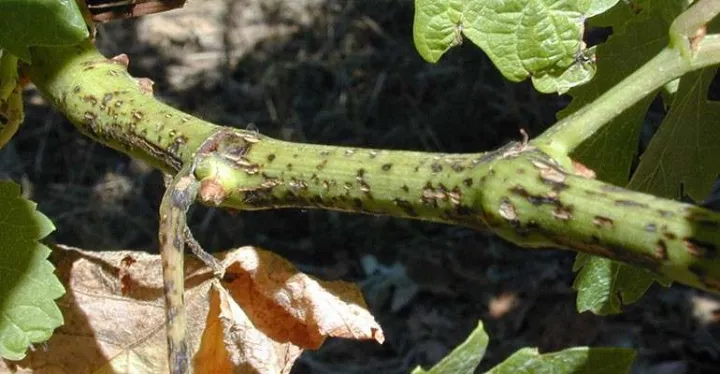
Initial signs of infection appear as small, water-soaked spots that quickly increase in size. Gradually, the center of the spot turns grayish-brown, while the edges develop a dark border.
On the surface of infected fruits, especially in watermelons, small black dots — the fungus's pycnidia — are often visible. This is the most characteristic diagnostic feature confirming the infection.
Under high humidity, a white or grayish fungal mycelium develops on the spots. Affected tissue areas become soft and start to sink, leading to rapid fruit rotting.
On stems and leaves, the disease manifests as necrotic spots that cause premature wilting and death of plant parts. Eventually, the entire plant may perish.
Diagnosing the disease is often difficult due to the similarity of symptoms with other fungal spots, so laboratory analysis of plant material is required for accurate identification.
Pathogen
The disease is caused by the imperfect fungus Phomopsis spp., belonging to the Deuteromycetes class. It can survive for a long time in soil and plant debris in the form of pycnidia and mycelium.
The fungus's life cycle includes the formation of pycnidia, within which two types of conidia are formed: alpha-conidia and beta-conidia. Both types are capable of causing primary infection in healthy plant tissues.
This fungus is a facultative parasite with high plasticity. In addition to fruits, it attacks stems, leaf petioles, and other vegetative parts of plants, penetrating through micro-cracks or mechanical injuries.
Inside the infected tissues, the pathogen spreads actively using enzymatic mechanisms to degrade host cell walls. This allows the fungus to quickly colonize the host plant when favorable conditions arise.
Phomopsis species are highly specialized and infect not only watermelons but also a wide range of other agricultural crops, including legumes, sunflowers, and fruit trees.
Conditions for development
Phomopsis development is favored by high air humidity, exceeding 75-80%. In conditions of prolonged rain or excessive irrigation, the risk of epiphytotics increases significantly.
The optimal temperature range for spore germination and active mycelial growth is between +20°C and +28°C. Under these conditions, the incubation period of the disease is minimized.
Poor agricultural practices, such as dense planting, lack of ventilation, and poor air circulation, create an ideal microclimate for the rapid spread of the pathogen.
The presence of free moisture on the surface of fruits and leaves is a key factor for infection. Spores are easily carried by raindrops, wind currents, and during agricultural operations.
Weakened plants, suffering from nutrient deficiencies or mechanical damage, become most vulnerable to infection by Phomopsis spp..
Why it matters
The primary danger of Phomopsis lies in the sharp reduction of the market quality of fruits. Infected produce loses its storage and transport potential, quickly becoming unusable.
With massive infection, the watermelon crop can be almost completely lost. The disease also depletes the parent plant, leading to reduced overall mass and sugar content of the fruits.
The pathogen creates infection hotspots in the field that persist in the soil for several seasons, complicating the use of infected areas in crop rotation for sensitive plants.
Indirect losses are associated with the need for expensive protective measures and the costs of sorting produce to remove damaged specimens.
In the case of seedling infection during early stages, young plants may die, leading to sparse planting and subsequent yield shortages.
Protection
The foundation of protection is the use of healthy seed material and the cultivation of resistant varieties. It is important to purchase seeds only from reliable suppliers with quality certificates.
Strict adherence to crop rotation breaks the pathogen's life cycle. It is recommended to return cucurbit crops to the same plot no sooner than every 3-4 years.
Timely removal and destruction of plant debris after harvesting is essential. Deep plowing of the soil helps accelerate the decomposition of infected tissues and reduces the overall inoculum level.
Applying fungicides with preventive and curative action is an effective method of control. Treatments should begin at the first sign of the disease, strictly observing pre-harvest intervals.
- Timely weeding to eliminate reservoir weeds.
- Optimizing irrigation to avoid soil waterlogging.
- Application of balanced mineral fertilizers.
- Regular phytosanitary monitoring of plantings.
Pathogens and affected parts
Affects crops · 1
Discussion
No discussions yet — be the first.