

Description
Symptoms
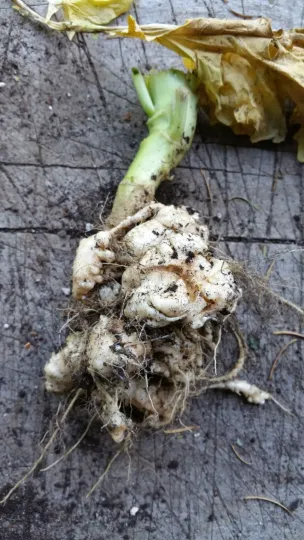
The primary symptom of clubroot is the development of abnormal galls, swellings, or club-like formations on the root systems of the infected plants.
Aboveground symptoms appear as stunted growth, wilting during periods of warm weather, and a distinct yellowing or chlorosis of the foliage.
In mature crops like oilseed rape, affected areas in the field may exhibit uneven development, with plants appearing thinner and less vigorous than healthy ones.
Upon closer inspection, the root system of a diseased plant is severely deformed, often losing its fibrous structure and failing to provide adequate nutrient uptake.
In root crops such as radishes or turnips, the presence of galls makes the harvest unmarketable, as the root structure is distorted and susceptible to secondary decay.
Pathogen
The causative agent of this disease is Plasmodiophora brassicae, an obligate soilborne protist that belongs to the group of plasmodiophorids.
This pathogen specifically attacks plants within the Brassicaceae family, including economically important crops such as oilseed rape, Indian mustard, turnips, radishes and various types of cabbages.
The life cycle of the pathogen begins with the release of zoospores from resting spores that reside in the soil and can remain viable for up to seven years.
Once in the soil, these spores penetrate the root hairs of susceptible hosts, initiating the process of abnormal cell division and tissue enlargement.
The pathogen completes its lifecycle inside the plant tissues, eventually releasing a new generation of resting spores back into the soil, thus perpetuating the cycle of infection.
Conditions for development
Clubroot development is highly dependent on soil conditions, preferring high moisture levels and poor drainage that facilitate zoospore movement.
Soil pH plays a critical role in the severity of the disease, as Plasmodiophora brassicae thrives in acidic soil environments with a pH below 6.0.
Optimal temperatures for infection typically range between 18 and 25 degrees Celsius, making spring and early summer periods particularly risky for susceptible crops.
The pathogen is easily dispersed across fields via infested soil particles moved by farm machinery, tools, and human activity.
Continuous cropping of susceptible Brassicaceae species encourages the rapid buildup of inoculum density in the soil, leading to significant yield losses over time.
Why it matters
The economic impact of clubroot is substantial, primarily due to the disruption of water and nutrient transport caused by damaged root vascular systems.
In severe cases, massive root system failure leads to the total loss of the crop, necessitating the complete destruction or abandonment of the infested field areas.
For vegetables and root crops, the disease results in poor quality, misshapen produce that does not meet standard commercial requirements for sale.
The presence of clubroot spores creates long-term limitations for land use, restricting the types of crops that can be safely cultivated in the affected rotation.
Farmers often incur high costs related to soil remediation, the need for resistant varieties, and the adoption of stricter sanitation protocols for farm equipment.
Protection
Effective management requires a comprehensive strategy including long crop rotations, typically keeping brassica crops away from infested soil for at least 5–7 years.
Liming the soil to maintain a higher pH level is a standard practice that significantly reduces the activity of the pathogen and limits infection rates.
Cultivating resistant or tolerant varieties of oilseed rape and other brassicas is the most practical and efficient method for minimizing yield losses in infested regions.
Strict sanitation measures, such as washing farm machinery to remove soil before moving between fields, are essential to prevent the spread of resting spores.
Weed control is also vital, as wild brassica species can host the pathogen, acting as reservoirs that sustain the infection even when no commercial crops are present.
In brief
4
Affects crops
Biology
Pathogens and affected parts
Pathogens
Affected plant parts
whole plant
Content graph
Affects crops · 4
Content graph
Connections · Clubroot
Most often together:
Marketplace
Products · 6


Community
Discussion
No discussions yet — be the first.