
Gammaproteobacteria
Gammaproteobacteria
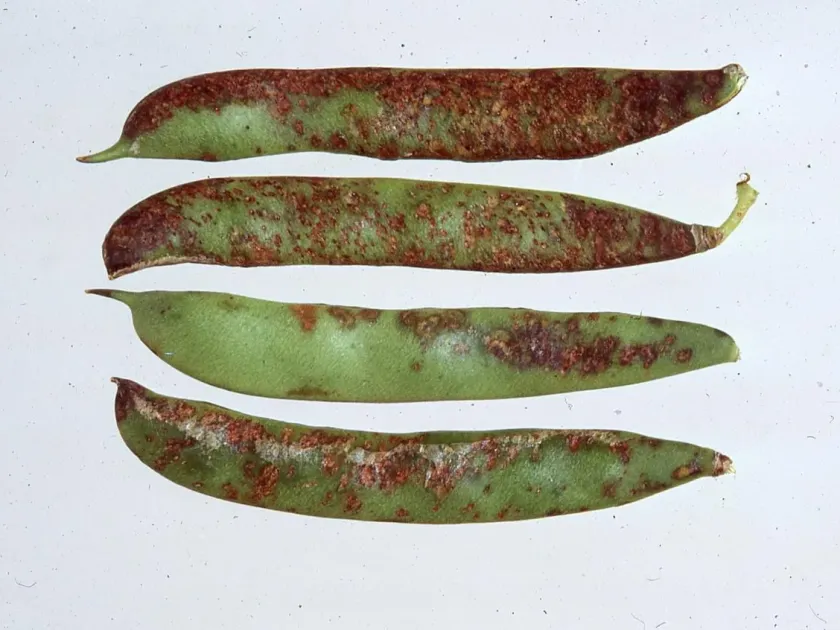
Description
Symptoms
Symptoms of Gammaproteobacteria infection often manifest as water-soaked lesions on leaves, which gradually expand and undergo tissue necrosis.
Vascular bacteriosis typically shows internal symptoms such as the browning or blackening of xylem vessels, resulting in wilting even when soil moisture is adequate.
Soft rot, caused by pectinolytic species, results in the rapid maceration of plant tissues, loss of turgor, and the emission of a foul, pungent odor.
Under high humidity, a bacterial ooze or exudate may become visible on the surface of infected stems, leaves, or fruit, facilitating secondary spread.
- Chlorosis and necrosis of leaf tissue.
- Stunting of overall plant growth and development.
- Formation of cankers or deep fissures on woody surfaces.
- Total collapse and rotting of succulent plant parts.
Pathogen
Gammaproteobacteria constitute a diverse class of gram-negative bacteria, containing many of the most significant and destructive plant pathogens globally.
Prominent genera such as Erwinia, Xanthomonas, Pseudomonas, and Pectobacterium are primary agents responsible for serious vascular and soft rot diseases.
These bacteria utilize advanced protein secretion systems to penetrate plant cell walls, suppress host immunity, and acquire necessary nutrients for their rapid multiplication.
The high genomic plasticity of these organisms allows them to evolve rapidly, leading to the development of new virulent strains capable of infecting a wide range of host crops.
Pathogens within this class exhibit a versatile lifestyle, surviving in seeds, soil, crop residues, or water supplies, waiting for suitable environmental conditions to initiate infection.
Conditions for development
The incidence and severity of diseases caused by Gammaproteobacteria are highly dependent on favorable environmental conditions, particularly high humidity and temperature.
Warm conditions, typically between 20°C and 30°C, are optimal for bacterial colonization and population growth, often making outbreaks common during summer months.
Surface moisture, such as dew, rain, or overhead irrigation, is essential for bacterial movement toward natural plant openings like stomata or hydathodes.
Mechanical injuries resulting from pruning, harvesting, or insect feeding provide direct entry points for these pathogens, significantly increasing the infection rate.
Poor ventilation in greenhouse environments contributes to the rapid dissemination of bacterial pathogens by maintaining stagnant, humid conditions around the foliage.
Why it matters
The economic impact of Gammaproteobacteria is substantial, as they can cause rapid and catastrophic losses of crop yield and post-harvest produce quality.
These pathogens impact a broad array of crops, including vegetables, fruit trees, and cereals, potentially wiping out entire seasons of production in susceptible areas.
Post-harvest rotting is a critical issue, as these bacteria can contaminate healthy produce during storage, leading to complete failure of supply chains and financial losses.
Infected plants suffer from disrupted nutrient transport, which reduces overall yield, lowers nutritional value, and degrades the visual appearance of harvestable parts.
Once established, soil-borne populations of these bacteria are notoriously difficult to eradicate, necessitating long-term adjustments in crop rotation practices.
Protection
Management strategies must prioritize an integrated approach, starting with the selection of certified disease-free seeds and resistant plant varieties.
Strict sanitation measures, including the removal and destruction of infected plant debris, are vital to reducing the primary inoculum source for the next season.
Controlling insect vectors is imperative, as these pests frequently spread bacterial cells while feeding, causing wounds that lead to immediate infection.
Preventative applications of copper-based bactericides may offer some protection, but their efficacy is limited and must be timed precisely with favorable disease conditions.
Disinfecting agricultural tools, machinery, and storage facilities is essential to prevent the spread of the pathogen between different fields or crop cycles.
Discussion
No discussions yet — be the first.