
Radopholus
Radopholus
Description
How to identify
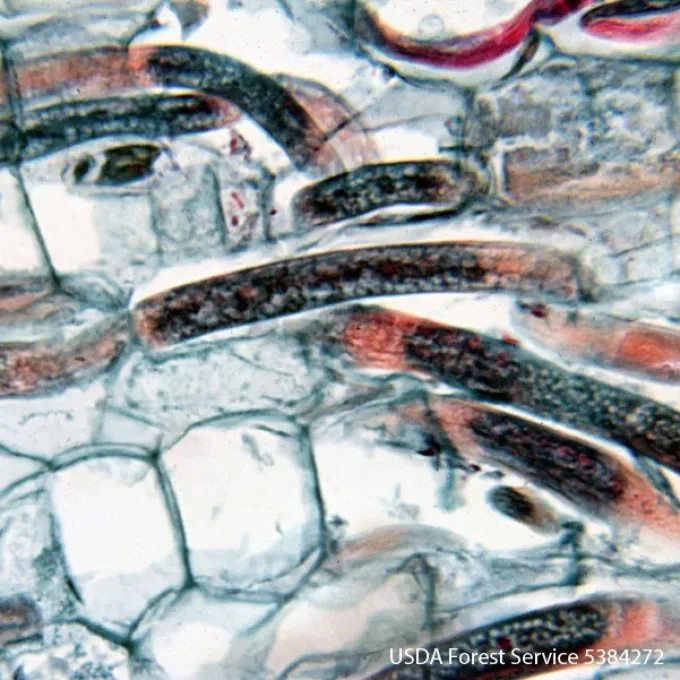
Radopholus is a genus of plant-parasitic nematodes, best known for the species Radopholus similis, commonly referred to as the burrowing nematode. These microscopic pests are obligate endoparasites that spend their entire life cycle within the roots of host plants.
Taxonomically, they belong to the Phylum Nematoda, Class Chromadorea, and Order Tylenchida. They are characterized by their small, vermiform shape and their ability to penetrate deep into the root cortex to feed on parenchymal cells.
The life cycle of Radopholus similis is relatively short, usually completing within 3 to 4 weeks depending on the temperature, which typically stays between 24°C and 28°C for optimal reproduction.
There is sexual dimorphism in this genus; while females are motile and continue to feed throughout their life, adult males do not feed and possess a reduced esophagus, focusing solely on reproduction.
Identification is mainly conducted through laboratory techniques involving root tissue extraction, microscopic examination, or PCR-based diagnostic tools to differentiate them from other root-lesion nematodes.
What it damages
The burrowing nematode is one of the most economically devastating pests in tropical and subtropical agriculture. It causes massive yield losses in banana, plantain, citrus, black pepper, and coffee plantations.
As they burrow through the root system, they create tunnels or cavities, which destroys the plant's ability to uptake water and essential minerals. This mechanical damage disrupts the vascular system and prevents normal growth.
Secondary infections by fungi such as Fusarium or Cylindrocladium often follow the nematode damage, causing rapid root rot. This complex pathology significantly accelerates the decline of the host plant.
In banana cultivation, the damage leads to the "toppling disease." Because the root systems become weak and decayed, the plants lack the necessary anchorage to withstand heavy winds or the weight of fruit bunches.
Once established, the nematode can survive in the soil for several months without a host, making it an extremely persistent and difficult pest to eradicate from commercial fields.
Signs of infestation
Visible symptoms include stunted growth, chlorosis, and wilting of foliage. Affected plants appear pale and show signs of nutrient deficiency despite proper fertilization programs.
Upon examination of the root system, one can see characteristic lesions. These start as small reddish-brown spots and eventually merge into large, necrotic black patches that indicate systemic tissue decay.
In mature plants, especially citrus, the symptoms are often described as "slow decline." The canopy becomes sparse, and there is a noticeable reduction in the number and size of fruits produced over time.
Planting areas often show irregular patches of infected plants. These patches tend to expand outward over the years if no control measures are applied to contain the nematode spread.
Root system inspection reveals a lack of healthy feeder roots, with existing roots appearing brittle, hollow, or completely rotted away when pulled from the soil.
Control measures
Phytosanitary and quarantine regulations are the primary lines of defense. Ensuring that only certified, nematode-free planting material enters a farm is crucial for long-term management.
Hot water treatment (HWT) of corms and seedlings is a standard protocol. Submerging the planting material in water at 50–55°C for about 20 minutes effectively kills the nematodes within the tissue without harming the plant.
Crop rotation remains an essential agrotechnical tool. Rotating host crops with non-host plants, such as specific cover crops or grasses, can significantly reduce the nematode population in the soil over time.
Good soil management, including deep plowing and the thorough removal of infested crop debris, helps to disrupt the nematode life cycle and reduce its survival in the environment.
Biological control, using fungi such as Pochonia chlamydosporia, is an emerging strategy that shows promise in reducing nematode egg populations in the soil and preventing future infestations.
Causes diseases · 1
Discussion
No discussions yet — be the first.