

Description
Symptoms
Symptoms initially appear on cotyledons and true leaves as small, water-soaked, angular lesions that eventually turn necrotic, appearing brown or dark gray.
A distinctive feature of this disease is the appearance of a bacterial ooze on the underside of infected leaves, which dries into a thin, shiny crust.
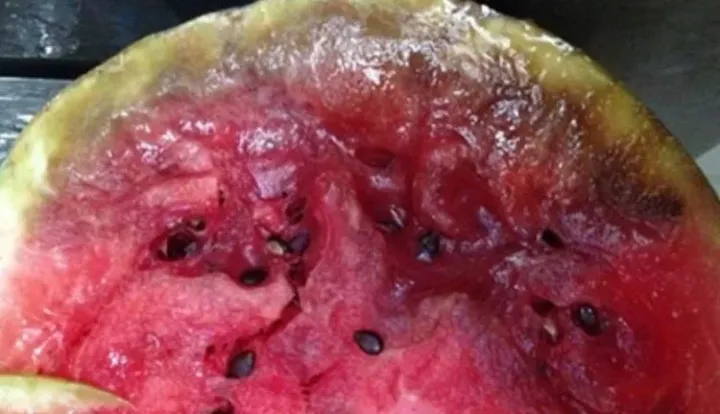
On watermelon fruits, infection manifests as small, water-soaked spots that quickly enlarge, often showing a rough or cracked texture due to tissue necrosis.
As the infection progresses, the spots on the fruit may become deeply sunken, leading to complete decay and the potential for secondary fungal or bacterial colonization.
A yellow halo often surrounds the necrotic lesions on the leaves, serving as a diagnostic indicator to distinguish bacterial blotch from other foliar pathogens.
Pathogen
Bacterial fruit blotch is caused by the Gram-negative, rod-shaped bacterium Acidovorax citrulli, which is recognized globally as a significant seed-borne pathogen.
The disease primarily impacts the Cucurbitaceae family, with watermelon being the most susceptible host. Other susceptible crops include cantaloupe, cucumber, and pumpkin.
Infected seeds are the primary mode of long-distance dispersal and the main source of primary inoculum in field environments, allowing the pathogen to persist for several seasons.
Once established in a field, the bacteria can survive in soil, on volunteer plants, and on crop debris, making cultural management difficult in subsequent planting cycles.
Transmission occurs through water movement, including splash from heavy rainfall, overhead irrigation, and handling by workers or contaminated farm equipment.
Conditions for development
The development of Acidovorax citrulli is heavily favored by warm, humid environments, with optimal infection occurring between 25°C and 30°C.
High relative humidity, particularly above 90%, is critical for the production of bacterial ooze and the successful infection of healthy plant tissues.
Overhead irrigation systems facilitate the spread of the bacteria by creating the necessary moisture film for movement and splashing inoculum onto developing fruits.
Dense plant canopies that reduce air circulation create microclimates where leaf wetness duration is extended, promoting rapid disease spread within the field.
Frequent rainfall episodes are especially conducive to outbreaks, as they combine high humidity with physical dispersal of the bacteria across the entire crop area.
Why it matters
The economic impact of bacterial fruit blotch is severe, as infected fruits are often unmarketable, leading to potential yield losses of up to 100% in extreme cases.
Early-season infection of seedlings can lead to total crop failure, requiring expensive replanting and disrupting the production schedule for the entire season.
Fruit decay associated with the pathogen not only reduces quality but also significantly diminishes the shelf life of the crop, creating storage and transport challenges.
Once a field is infested, the pathogen creates long-term biosecurity issues, necessitating strict sanitation protocols and limiting future rotation options for cucurbit crops.
The presence of the disease can cause major losses in seed production, as contamination of seeds directly threatens the viability of future commercial harvests.
Protection
The most important control strategy is the use of high-quality, pathogen-free seeds that have been tested and verified by accredited laboratories for Acidovorax citrulli.
Implementing a strict crop rotation of at least 3 years is essential to reduce the inoculum level in the soil and prevent the carry-over of the bacteria between seasons.
Growers should transition from overhead irrigation to drip irrigation to keep the foliage and fruit surface dry, thereby minimizing conditions conducive to infection.
Preventative applications of copper-based bactericides can help limit the spread of the disease by creating a protective layer on the plant surfaces.
Rigorous sanitation, including the destruction of crop debris and the decontamination of farm machinery and tools, is necessary to prevent the spread of the bacteria to new fields.
In brief
1
Affects crops
Biology
Pathogens and affected parts
Affected plant parts
fruit
Content graph
Affects crops · 1
Content graph
Connections · Bacterial fruit blotch
Most often together:
Marketplace
Products · 2

Community
Discussion
No discussions yet — be the first.