
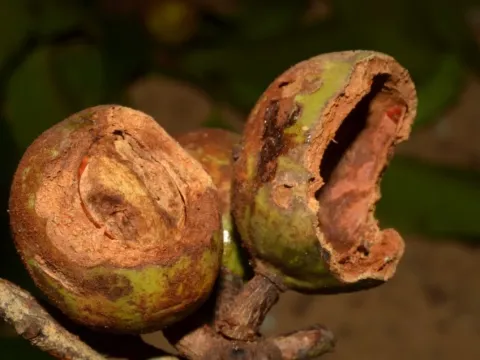
Staudtia
Staudtia
Staudtia is a genus of evergreen trees belonging to the Myristicaceae family. These trees are prominent components of the tropical rainforest ecosystems, primarily found in Central and West Africa.
What the section contains

Staudtia
The genus thrives in environments characterized by high annual precipitation and consistent temperatures, typical of tropical lowland forest biomes.
Botanically, Staudtia trees are known for their dense wood structure and specific leaf morphology, which are adaptive traits for surviving in competitive rainforest habitats.
Growth requirements include fertile, well-draining soil and a humid microclimate. They rely on the protective canopy of the forest during their juvenile stages to avoid excessive sunlight.
Propagation and cultivation of Staudtia are highly sensitive to soil microbiology, necessitating specific fungal associations for optimal root nutrient uptake.
The primary economic output derived from Staudtia is its exceptional hardwood, which is prized for its strength, density, and natural resistance to decay.
It is widely utilized in heavy-duty construction, high-end furniture manufacturing, and flooring due to its durability against wood-boring insects and moisture.
In terms of forestry, the yield is assessed by the quality and volume of timber harvested per hectare under strictly managed, sustainable selection systems.
Secondary uses of the plant products, including seeds and oils, have been documented in traditional local practices, though timber remains the industrial focus.
Sustainable harvesting cycles are essential, as the species generally exhibits a slow growth rate, requiring decades to reach full commercial maturity.
The most significant threat to Staudtia populations is habitat loss caused by large-scale deforestation and conversion of forest land into agricultural sites.
Phytosanitary risks include various tropical fungal pathogens that target the vascular system of the trees, often exacerbated by environmental stress.
Specific insect pests that target seedlings and bark can drastically reduce the recruitment rates in natural forest gaps.
Climate change poses a long-term risk, as altered precipitation patterns disrupt the delicate balance required for the germination and survival of young saplings.
Unsustainable logging practices, if not strictly monitored, lead to genetic bottlenecks and fragmentation, threatening the long-term viability of the genus.