
Staudtia kamerunensis
Staudtia kamerunensis
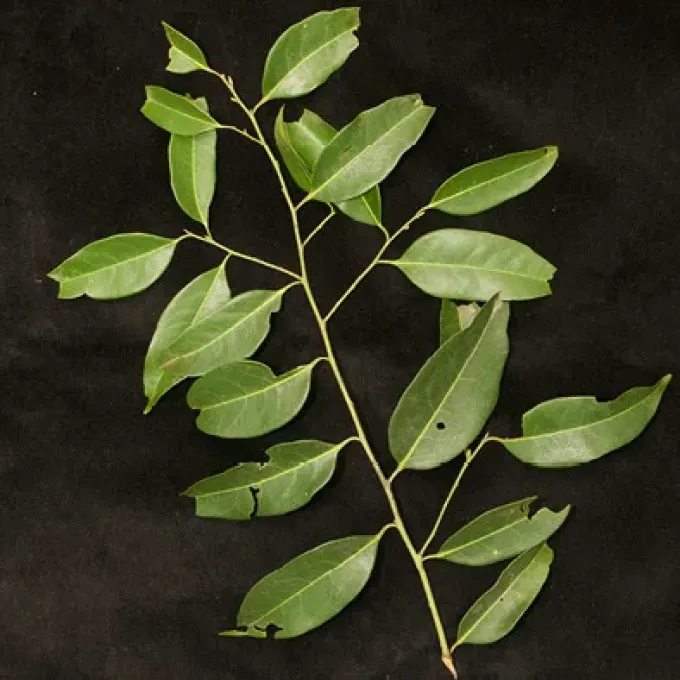
Description
Growing requirements
Staudtia kamerunensis is a notable species belonging to the Myristicaceae family, native to the tropical forests of Central and West Africa. This tree is primarily recognized for its high-quality timber and role in forest ecosystems.
The species thrives in warm and humid equatorial climates, requiring consistent rainfall throughout the year. It prefers deep, nutrient-rich, well-drained alluvial soils that support its robust physiological processes.
For successful growth, young plants require a certain level of shade to protect them from direct heat during the establishment phase. As the trees mature, they become increasingly sun-tolerant, eventually forming part of the canopy layer.
Agrotechnical management includes monitoring the health of plantations to ensure growth rates are maintained. Soil conservation practices are crucial, as the tree relies on stable ground conditions for its root development.
Biological resilience is a hallmark of this species, allowing it to withstand competition from other flora in natural forest settings, provided that moisture availability remains constant.
Harvesting
The primary economic output of Staudtia kamerunensis is its durable wood, commercially referred to as Niove. This timber is highly valued for its hardness, density, and natural resistance to decay and insects.
The wood is frequently used for heavy construction, high-end flooring, and specialized cabinetry. Its mechanical properties make it a premium choice for projects where durability is the main concern.
Harvesting strategies are typically focused on sustainable forestry, ensuring that individual trees reach sufficient maturity before being selected for timber production.
The wood requires sharp, heavy-duty machinery for sawing and planing due to its extreme density. However, it finishes well, producing a smooth surface that is ideal for high-traffic environments.
Given the global demand for sustainable timber, the management of this species is increasingly focusing on reforestation programs within its original geographic range.