
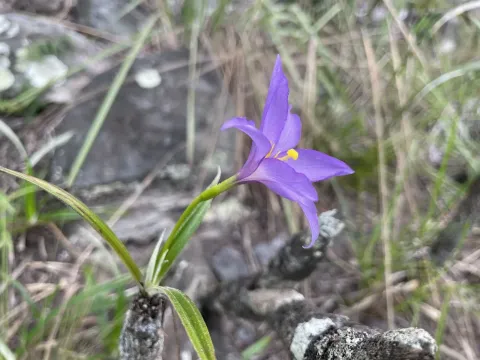
Vellozia
Vellozia
Vellozia is a genus of perennial plants in the Velloziaceae family, known for their exceptional resilience in arid environments. These plants are true xerophytes, often adapted to survive in harsh, rocky landscapes where water availability is highly inconsistent.
What the section contains

Vellozia
The native range of the genus covers diverse habitats in South America, particularly Brazil, as well as parts of Africa and Madagascar. They typically thrive on nutrient-poor, rocky substrates, often forming dense, shrub-like colonies that stabilize the soil surface.
Botanically, these plants are defined by their fibrous, often woody stems protected by persistent leaf bases. The foliage consists of narrow, stiff, and linear leaves that grow in terminal tufts, which is a structural adaptation to withstand intense solar radiation.
Successful cultivation requires mimicry of their natural xerophytic environment. Plants demand high light intensity for optimal health and blooming, as well as a highly porous, well-draining soil mix that prevents water logging at all times.
Watering requirements are minimal compared to standard agricultural crops. It is essential to allow the growing medium to dry out completely between irrigations to avoid suffocating the roots, which are accustomed to high levels of oxygenation in rocky crevices.
The most significant threat to Vellozia in an artificial environment is root rot, induced by excessive irrigation or poor drainage. Once root tissue begins to decay, the plant loses its ability to regulate its internal water balance, leading to rapid decline.
Common pests include spider mites and mealybugs, which thrive in low-humidity environments. Maintaining proper air circulation and performing periodic visual inspections of the leaf rosettes are critical practices to mitigate the risk of pest infestations in this culture.