
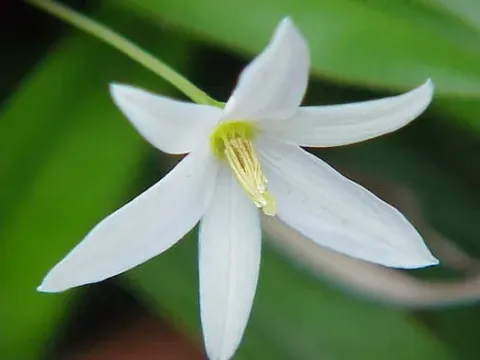
Talbotia
Talbotia
Talbotia is a distinct genus within the Asparagaceae family, known primarily for its elegant foliage and adaptation to arid environments. As a perennial succulent, it exhibits specific growth patterns that necessitate attention to environmental stability.
What the section contains

Talbotia
The plant originates from Southern Africa, thriving in rocky habitats where it is exposed to high levels of sunlight and irregular rainfall. These environmental origins dictate its physiological need for intense light and excellent air circulation.
Regarding soil requirements, Talbotia demands an extremely well-draining substrate. A mixture consisting primarily of coarse sand, grit, and minimal organic matter is essential to simulate its natural rocky environment and prevent root rot.
Watering strategies must be adjusted seasonally to mimic the natural cycle of its native habitat. During the active growing phase, regular but careful watering is necessary, while the dormant winter phase requires a nearly completely dry substrate to maintain health.
Climate control is vital, as the species is not frost-tolerant. It is best suited for greenhouse environments or indoor settings where temperature fluctuations can be minimized, ensuring the plant remains within its preferred warm thermal range year-round.
The primary threats to Talbotia cultivation include fungal infections, specifically those affecting the roots and stem base due to excess soil moisture and poor drainage.
Common insect pests, such as mealybugs and spider mites, are frequent challenges in confined environments, often requiring manual removal or targeted biological control methods to manage populations effectively.