
Ulva linza
Ulva linza Linnaeus
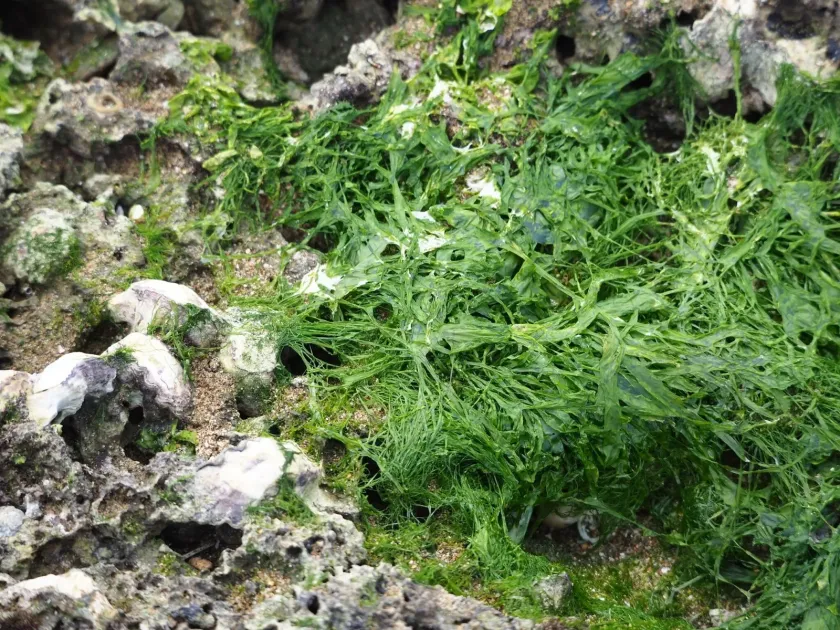
Description
Sowing dates
The cultivation of Ulva linza in an aquaculture setting typically begins with the collection of zoospores from natural substrates or mature algal stock. These spores are allowed to settle onto artificial substrates, such as ropes or mesh nets, which serve as the foundation for the growing population.
Successful seeding requires precise control over water flow and salinity. The spores must be kept in a stable environment where they can safely attach and initiate the germination process without being displaced by strong currents during their early vulnerable stage.
The seasonality of seeding is vital for maximizing productivity. Growers generally target periods with moderate water temperatures to prevent heat-induced stress during the initial growth phase, which could otherwise limit the density of the developing algal thalli.
In tank-based systems, researchers often use photoperiod manipulation to synchronize the release of spores, ensuring a more uniform and predictable harvest cycle. This level of control is essential for scaling up production in industrial facilities.
Strategic placement of offshore farming rigs is crucial, as the initial colonization of the substrate by the algae is influenced by the surrounding water quality and the natural presence of nutrients in the local ecosystem.
Growing requirements
Ulva linza, a member of the Ulvaceae family, is a green seaweed adapted to coastal and estuarine environments. It thrives in well-aerated waters where movement is consistent, facilitating efficient gas exchange and nutrient uptake through its thin leaf-like structures.
The species is euryhaline, capable of tolerating a range of salinity levels, which makes it highly adaptable for various aquaculture sites. However, stable salinity levels are preferred for achieving the highest rates of vegetative growth and cellular division.
Light availability is the primary driver of photosynthesis and biomass accumulation. The algae require high-intensity light, typically found in the upper photic zone, to maintain the rapid growth cycles characteristic of this genus.
Nutrient requirements are centered on nitrogenous compounds, particularly nitrates and ammonium. In controlled environments, providing a balanced supply of nitrogen and phosphorus is essential to prevent growth stunting and to maximize the nutritional value of the harvest.
Water temperature significantly influences the metabolism of Ulva linza. While it exhibits a wide tolerance, the optimal range for industrial production is between 12°C and 22°C, which promotes healthy growth and delays the onset of the reproductive phase.
Yield
The biomass yield of Ulva linza is exceptionally high under optimized conditions. Its ability to undergo rapid cell division allows the population to double in size within just a few days, provided that space and nutrient levels remain sufficient.
Integrated Multi-Trophic Aquaculture (IMTA) systems represent an ideal environment for this species, as it efficiently utilizes nitrogen-rich waste from fish or crustacean farming. This synergy significantly boosts total biomass output while reducing environmental impact.
Harvest density is a critical factor in yield management. Excessive overcrowding reduces light penetration and nutrient availability per plant, which can lead to localized decay; thus, maintaining an optimal spacing is a key agronomic practice.
Modern production techniques, such as the use of artificial LED lighting during off-hours, have shown the potential to increase yields by 20% to 30%. These technological interventions are becoming standard in high-intensity phycoculture operations.
Biomass output is measured through weight monitoring of the wet thallus, though the industry relies on dried weight for accurate quality assessment. Consistent yields are ensured by regular monitoring and adjusting the nutrient dosing based on real-time growth rates.
Main diseases and pests
The primary threat to Ulva linza crops is the proliferation of epiphytic diatoms and filamentous algae, which compete for light and space. These organisms can quickly cover the surface of the thalli, effectively starving the crop of necessary sunlight.
Bacterial pathogens pose a significant risk, especially in stagnant water conditions or when temperatures exceed the optimal range. Such infections typically present as white, necrotic patches on the thallus, which can rapidly spread across the entire farm.
Grazing by marine herbivores, including various species of snails and crustaceans, can cause substantial economic losses. Controlling these pests requires vigilant monitoring and, in some cases, the implementation of mechanical barriers to protect the younger algae.
Pollution, particularly heavy metal accumulation, is a major concern for commercial production. Because Ulva linza is an efficient bioaccumulator, contaminated water can render the entire harvest unsafe for human or animal consumption.
Physical damage from storm surges and heavy wave action can tear the thalli from their attachment points. To mitigate this, farmers use reinforced growing structures and select sheltered locations that minimize the impact of mechanical stress on the crop.
Harvesting
Harvesting Ulva linza is performed using mechanical cutters or manual collection methods, depending on the scale and structure of the farming system. The extraction process is designed to be swift to minimize damage and preserve the integrity of the algal tissue.
The optimal time for harvest is during the active vegetative stage, before the algae enter their reproductive cycle. Harvesting at this point ensures the highest nutritional quality and prevents the decline in tissue structure associated with sporulation.
Post-harvest processing involves thorough washing to remove sand, debris, and associated small marine organisms. This step is essential to meet sanitation standards required for food and pharmaceutical applications.
Methods for storage include air-drying, freeze-drying, or fermentation. Low-temperature drying techniques are preferred, as they retain the volatile vitamins and bioactive compounds that contribute to the commercial value of the product.
Logistics are highly time-sensitive, with processing facilities ideally located near the harvest site. Quick transport helps maintain the product’s vibrant green color and chemical stability, ensuring that it reaches the market in prime condition.