
Cephaleuros
Cephaleuros
Cephaleuros is a genus of parasitic green algae belonging to the Trentepohliaceae family. Unlike most algae, which are autotrophic and aquatic, this genus has adapted to a semi-parasitic lifestyle on the leaves and bark of various woody plants.
What the section contains


Cephaleuros
The organism primarily thrives in humid tropical and subtropical environments. High rainfall and sustained moisture are essential for the dispersal of its zoospores, which allow the algae to infect new host tissues.
It colonizes a wide range of economically important hosts including citrus, coffee, tea, cacao, and mango. The algae form extensive mats within the intercellular spaces of the host plant, often causing local tissue death.
Cultural practices such as proper pruning are vital for management. By improving air circulation within the canopy, farmers can reduce the humidity levels that the algae require for reproduction and colonization.
Soil management plays a role indirectly; healthy plants with balanced nutrition and proper drainage are generally more resilient to the stress caused by the algal colonization of their leaves and stems.
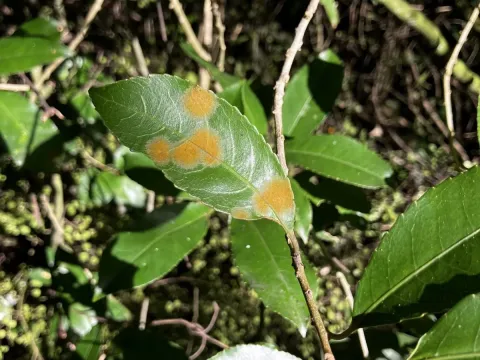
The most distinctive symptom of an infection is known as "red rust." This refers to the dense, velvet-like patches of orange-red to reddish-brown sporangiophores that emerge through the stomata of the host leaves.
These patches interfere with photosynthesis, leading to chlorosis, leaf drop, and the stunting of young shoots, which can severely impact the vigor of the plant over multiple growing seasons.
In addition to foliage damage, Cephaleuros can cause cankers on twigs and branches. These lesions disrupt nutrient transport and can lead to dieback of the affected parts of the plant canopy.
Control strategies predominantly involve the application of copper-based fungicides. These treatments must be timed carefully, ideally before or during periods of high rainfall when spore production is at its peak.
Sanitation is a key preventative measure. Pruning and removing heavily infected branches helps reduce the inoculum load, preventing the spread of the pathogen throughout the orchard or plantation.