
Phycopeltis
Phycopeltis
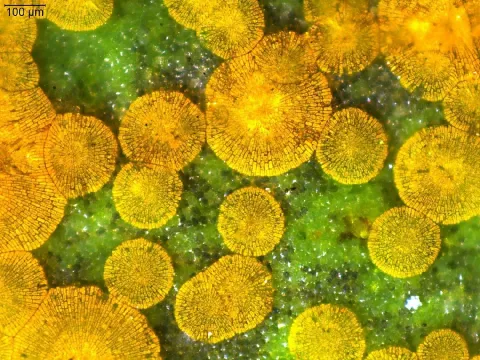
Phycopeltis is a genus of green algae belonging to the Trentepohliaceae family. These organisms are recognized as specialized epiphyllous algae, meaning they live exclusively on the surface of vascular plant leaves, particularly in tropical and subtropical environmental conditions.
What the section contains
Phycopeltis
Growth requirements for Phycopeltis are strictly tied to high-humidity climates. They thrive in environments where ambient moisture is sufficient to maintain a thin film of water on the leaf surface, which is essential for the dispersal and motility of their reproductive zoosporic stages.
Botanically, Phycopeltis is characterized by its distinct discoid thallus structure. These discs are typically monostromatic, meaning they consist of a single layer of cells that spread radially across the leaf cuticle. This structure allows the alga to anchor firmly without causing significant physical damage to the host plant.
The distribution of this genus spans across tropical and subtropical zones, where it colonizes a wide range of hosts, including tea plants, citrus, and various broad-leaved trees. It is a common component of the leaf surface microbiome, often living in proximity to other epiphytic fungi and bacteria.
From an agricultural standpoint, Phycopeltis is generally considered a benign organism rather than a pathogenic threat. While heavy colonization may slightly inhibit gas exchange or photosynthesis on a leaf, it rarely requires specific control measures, as it does not extract nutrients directly from the plant's internal systems.