
Cephaleuros virescens
Cephaleuros virescens
Description
Main diseases and pests
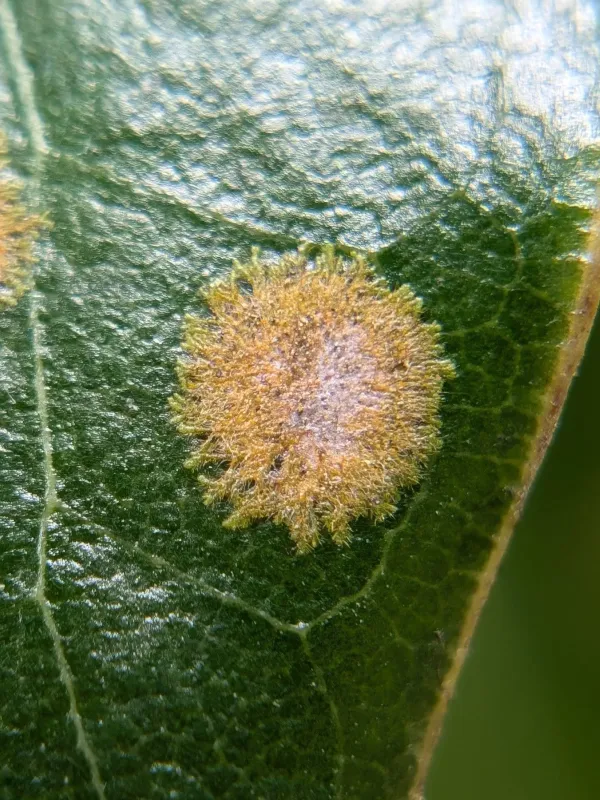
Cephaleuros virescens is a parasitic filamentous green alga belonging to the Trentepohliaceae family. It is not an agricultural crop but rather a serious plant pathogen that specifically targets the leaves, stems, and fruits of various tropical and subtropical plants, acting as a major threat to agricultural productivity in these zones.
The host range of Cephaleuros virescens is remarkably broad, including economically significant crops such as tea, coffee, cacao, citrus, and avocado. The alga thrives in environments where high humidity and frequent rainfall are consistent, allowing it to propagate and colonize plant tissues effectively throughout the year.
Botanically, the organism manifests as circular, velvety, or crust-like spots on the foliage, ranging in color from greenish to reddish-brown. These structures, known as thalli, develop on the surface and penetrate the plant's cuticle, leading to tissue necrosis, premature defoliation, and decreased photosynthetic capacity, which eventually weakens the entire tree.
Environmental conditions are crucial for its lifecycle, as the dispersal of motile zoospores requires moisture to move across leaf surfaces. Consequently, the pathogen becomes particularly destructive in orchards with dense canopy covers where airflow is restricted, leading to high-humidity microclimates that favor rapid colonization.
Effective management and control strategies for this parasitic alga include:
- Maintaining proper spacing between plants to maximize airflow and reduce canopy humidity.
- Pruning and removing heavily infected branches to decrease the pathogen inoculum.
- Applying copper-based fungicides during periods of high humidity to protect vulnerable foliage.
- Ensuring optimal plant nutrition to help host plants recover from the stress caused by the parasitic infection.