
Cephaleuros aucubae
Cephaleuros aucubae
Description
Growing requirements
Cephaleuros aucubae is a species of parasitic green algae belonging to the Trentepohliaceae family. Unlike most algae that live in aquatic environments, this species is specialized for living on the leaves of terrestrial plants as an epiphyte or parasite.
The organism primarily originates and spreads in warm, humid tropical and subtropical regions. Its distribution is strictly dictated by the availability of moisture, as the algae require liquid water on the leaf surface to complete their reproductive cycle and germinate spores.
The environmental requirements include high relative humidity and low airflow, which prevent rapid drying of the leaf surface. In agricultural settings, shaded locations with poor ventilation become hotbeds for the colonization of this alga on susceptible host plants.
Common hosts include various ornamental shrubs such as Aucuba and Camellia. The alga penetrates the leaf cuticle and develops a thallus between the epidermis and the underlying tissue, which facilitates the uptake of nutrients from the host's cells.
Agricultural management centers on microclimate control. Proper spacing of plants to increase airflow, pruning to prevent overcrowding, and avoiding overhead irrigation are essential practices to ensure that leaves remain dry, thus hindering the establishment of the pathogen.
Main diseases and pests
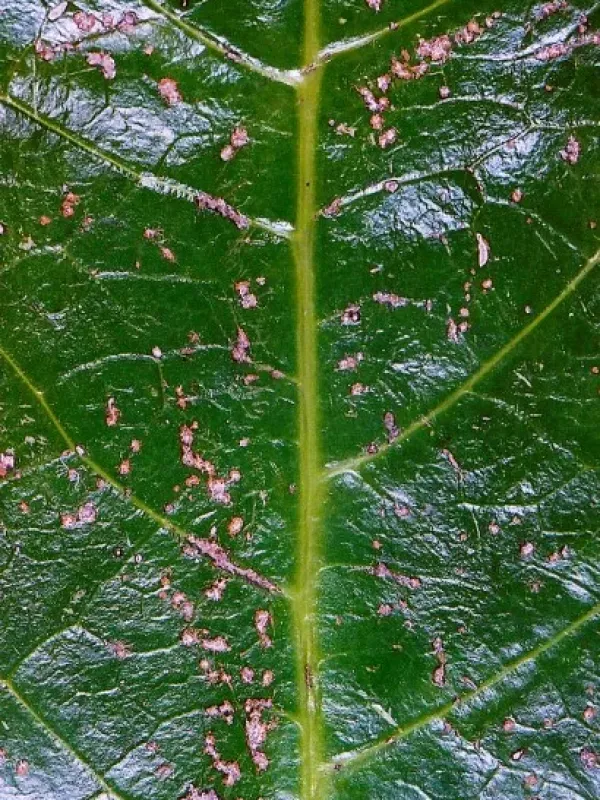
The most visible sign of Cephaleuros aucubae infection is the appearance of spots on the leaves. These lesions typically vary in color, often presenting as yellow or reddish-brown patches, which correspond to the development of the algal reproductive structures.
The impact of this alga on the host is primarily due to the localized damage of leaf tissues. By colonizing the leaves, the alga reduces the overall photosynthetic capacity of the plant, which may lead to stunted growth and reduced vigor over time.
Controlling this parasite is challenging because it is not affected by conventional fungicides used against true fungi. Strategies often involve the use of copper-based sprays, which act as a protectant, preventing the spores from germinating on the leaf surface.
Sanitation plays a crucial role in preventing further spread. Growers are advised to remove and dispose of infected leaves and pruning debris, as these serve as reservoirs for future spore production and subsequent re-infection of the canopy.
While rarely fatal, the presence of the alga drastically reduces the aesthetic value of ornamental nursery crops. A successful management program integrates preventative horticultural techniques with targeted chemical protection to keep plant surfaces clear of the pathogen.