
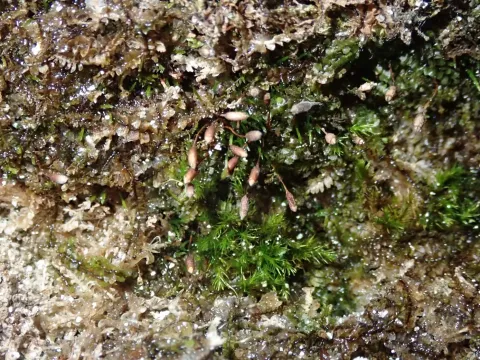
Tetrodontium repandum
Tetrodontium repandum
Tetrodontium repandum is a distinct moss species belonging to the family Tetrodontiaceae. It is important to clarify that this organism is not an agricultural crop; rather, it is a scientifically significant bryophyte that occupies niche habitats within forest ecosystems.
What the section contains
Tetrodontium repandum
This species thrives in highly specific environments, typically on moist, shaded rock faces or siliceous boulders. Its geographical distribution includes various temperate regions across the Northern Hemisphere, where it relies on high humidity and consistent microclimatic conditions.
The biological structure of Tetrodontium repandum is finely tuned to its environment. It utilizes a specialized protonema to establish itself on substrate surfaces, effectively absorbing moisture and nutrients directly from the air and the rocky surface it inhabits.
Requirements for its growth include minimal direct sunlight and protection from wind, which could induce desiccation. The species is restricted to areas where the surrounding vegetation provides a stable, cool, and humid microclimate necessary for its physiological processes.
Botanically, it is recognized by its small, clustered gametophytes. The life cycle of the moss is inherently tied to the availability of stable, acidic substrates, which are crucial for the attachment and maturation of the plant within its natural rock-dwelling habitat.
The primary threat to Tetrodontium repandum populations is the alteration of its fragile habitat. Deforestation and the removal of canopy cover significantly disrupt the microclimate, leading to increased exposure and moisture loss that the species cannot tolerate.
Air pollution acts as a major limiting factor for this moss. Because bryophytes lack a protective cuticle, they are highly susceptible to atmospheric contaminants and heavy metals, which can accumulate in their tissues and inhibit metabolic functions.
Climate change, manifesting as longer, more frequent droughts, poses a serious risk to the long-term survival of colonies. Prolonged periods without moisture cause the plant to wither, and recovery in such delicate ecosystems is often hindered by slow growth rates.
Physical disturbance of its rocky substrate, whether through natural erosion or human-induced activity, can destroy the specialized niche required for colonization. Once a colony is fragmented or removed, the recolonization process is exceptionally slow.
As a specialized inhabitant of unique ecosystems, the species is vulnerable to competition from more opportunistic flora when environmental conditions shift. Conservation efforts are essential, focusing on the protection of intact forest buffers where these moss populations remain.