
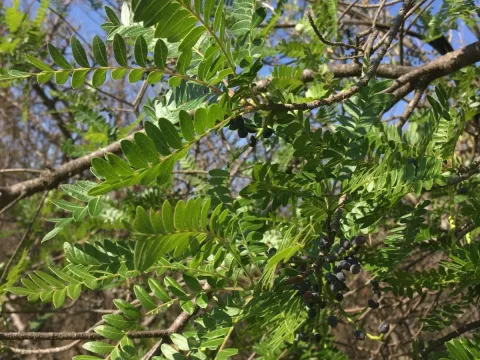
Texas pistache
Pistacia texana
Texas pistache (Pistacia texana) is a small, deciduous tree belonging to the Anacardiaceae family. Native to the limestone hills of southwestern Texas and northern Mexico, it is a hardy species well-adapted to hot, arid climates and thin, rocky soils.
What the section contains
Texas pistache
The plant demonstrates exceptional drought tolerance once established. Its root system is capable of exploring deep crevices in limestone to reach moisture, which allows it to thrive in environments where most agricultural crops would perish due to water deficit.
For successful cultivation, Texas pistache requires full sun exposure and excellent soil drainage. It cannot tolerate heavy, waterlogged clay soils, which promote root rot and can lead to the rapid decline of the specimen.
Botany-wise, the tree is recognized by its glossy, pinnately compound leaves and small, reddish-hued flowers. The tree is dioecious, meaning separate male and female plants are required for pollination and fruit production, though the fruit itself is generally considered non-edible compared to common pistachios.
In terms of agricultural and landscape usage, the Texas pistache is highly valued for its low maintenance requirements. It serves as an excellent candidate for xeriscaping projects and erosion control on steep, rocky embankments where traditional soil stabilization is difficult.
The primary concern for Texas pistache is soil moisture management. Root rot caused by fungal pathogens (such as Phytophthora) represents the most significant threat, especially during seasons with excessive rainfall.
Pests such as aphids and scale insects occasionally infest the foliage. While these rarely cause fatal damage to mature trees, they may stunt the growth of young saplings, necessitating localized control measures.
Small mammals and rodents often pose a risk to young plants by gnawing on the bark during winter months. Protecting the base of the trunk with wire mesh is an effective strategy for preserving the long-term health of the tree.
Foliar diseases, including minor spots, may occur under conditions of high humidity. Proper spacing and airflow within the canopy are usually sufficient to manage these issues without the need for intensive fungicide applications.
As the plant is generally pest-resistant, chemical intervention should remain a last resort. Monitoring plant health and ensuring proper environmental conditions are the most reliable methods for sustaining a healthy orchard or landscape planting.