
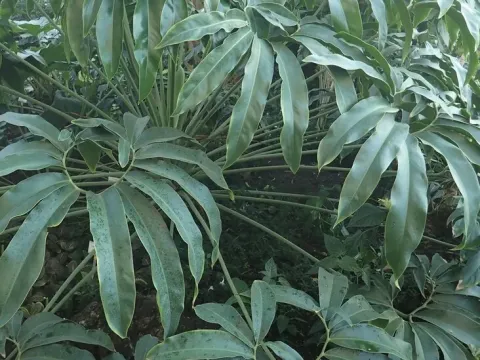
Thaumatophyllum spruceanum
Thaumatophyllum spruceanum
Thaumatophyllum spruceanum is a prominent member of the Araceae family, native to the tropical rainforests of South America. It is a robust plant known for its deeply divided, decorative foliage.
What the section contains
Thaumatophyllum spruceanum
The plant thrives in tropical environments, requiring consistent temperatures ideally between 20°C and 28°C. Protecting the plant from cold drafts is essential to maintain healthy metabolic rates in the leaves.
Soil requirements involve a well-draining, organic-rich medium. A mixture of peat, pine bark, and perlite provides the necessary aeration for the root system, preventing compaction and potential asphyxiation.
Regarding light, this species prefers bright, indirect light. While it can adapt to lower light levels, excessive shade often results in slower growth rates and reduced leaf size, characteristic of light-seeking responses.
Consistent moisture management is key. The root zone should remain damp but never saturated. In agricultural settings, irrigation schedules must be adjusted based on seasonal light availability and transpiration rates.
Root rot is the most common threat to Thaumatophyllum spruceanum, usually resulting from poor drainage or excessive irrigation during the dormant phase. Proper monitoring of the substrate moisture is critical.
Spider mites represent a major pest risk, particularly in indoor environments with low relative humidity. They feed on plant fluids, which leads to chlorotic spots and premature leaf senescence.
Mealybugs and scale insects may also infest the plant, colonizing the stems and the undersides of the leaves. Manual removal or the application of horticultural oils is recommended for mild infestations.
Fungal leaf spot diseases can occur if the foliage remains wet for extended periods without adequate air circulation. Improving ventilation around the plant canopy is a primary preventative measure.
Nutrient deficiencies, specifically nitrogen or magnesium, can manifest as leaf yellowing. Implementing a balanced fertilization regime during the active growing season is vital for optimal development.