
Tetrodontium brownianum
Tetrodontium brownianum
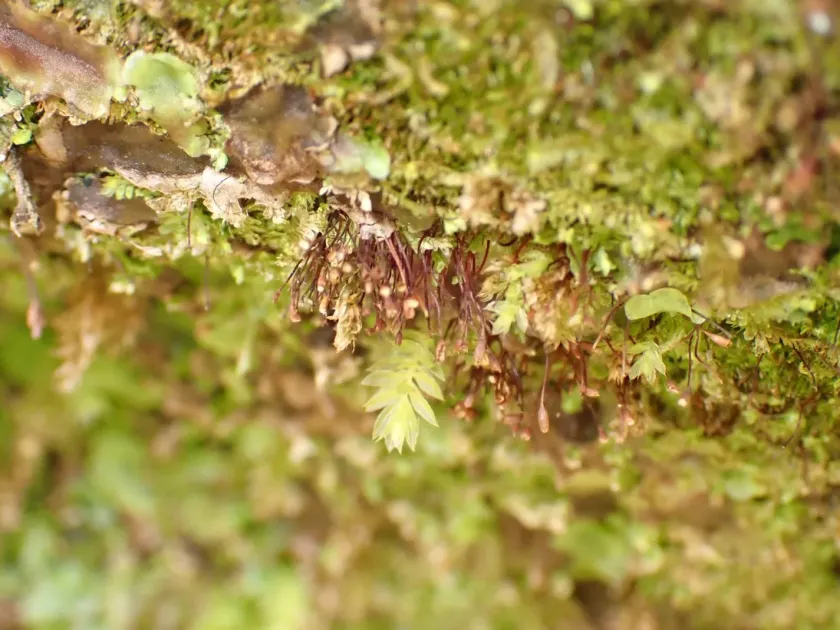
Description
Growing requirements
Tetrodontium brownianum is a rare moss species belonging to the family Tetraphidaceae. It is strictly a wild botanical species and is not classified as an agricultural crop or plant for commercial cultivation.
The plant grows in highly specialized ecological niches. It is typically found on vertical, damp sandstone or granite rocks in shaded areas, where it is shielded from direct sunlight and environmental instability.
Its native range spans northern and temperate regions of Europe and North America. The moss requires consistently high humidity and a stable microclimate to maintain its life cycle, making it very fragile.
Botanically, it is a very small plant. It is identified by its minute, kidney-shaped leaves and distinct sporophytes, which feature a peristome consisting of four large, prominent teeth.
Due to these biological traits, it has no agricultural or economic use. It cannot be cultivated using standard agronomic practices as it requires specific micro-environments provided by natural rocky substrates.
Main diseases and pests
The primary threat to Tetrodontium brownianum is the destruction of its natural habitat. Quarrying, land development, and stone erosion pose the greatest risks to existing populations.
Air pollution is another major factor, as mosses absorb moisture and nutrients from the atmosphere, making them highly susceptible to chemical contamination and heavy metals.
Climate change, which alters local humidity levels and causes the drying out of rock crevices, creates a hostile environment that prevents the successful growth and reproduction of the moss.
There are no recorded agricultural pests or diseases for this species, as it does not grow in conditions where common crop pests would be present or active.
Because of its rarity, it is protected under various conservation regulations. Preservation of its undisturbed natural habitat is the only viable method for ensuring its continued survival.