
Brunfelsia undulata
Brunfelsia undulata Sw.
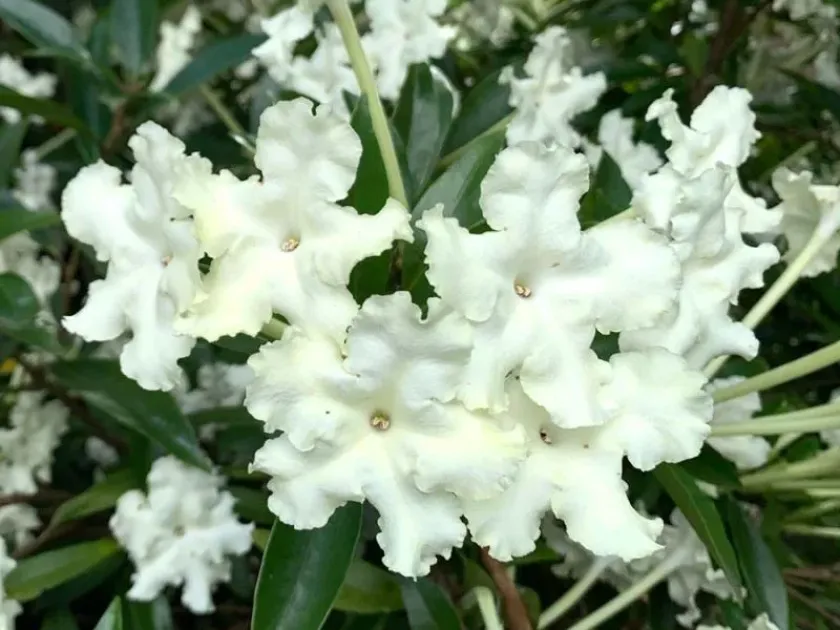
Description
Growing requirements
Brunfelsia undulata is a distinct ornamental shrub belonging to the Solanaceae family. Native to the Caribbean, particularly Jamaica, this plant is admired for its striking, wavy-edged white flowers that emit a pleasant fragrance, especially at night.
Climate requirements for this species are strictly tropical. It thrives in high humidity and stable warm conditions. Temperatures should consistently remain between 18 and 25 degrees Celsius, as the plant does not tolerate cold drafts or sudden thermal shock.
Soil requirements involve a rich, slightly acidic, and well-draining medium. A mix of peat moss, pine bark, and perlite provides the necessary structure to maintain moisture while ensuring roots have sufficient aeration to prevent rotting.
Agrotechnical care focuses on consistent moisture levels. The plant should be watered thoroughly but allowed to dry slightly between sessions. Over-watering is the most frequent cause of failure in cultivating this specific variety of Brunfelsia.
Lighting needs are moderate to bright. Direct sunlight is generally harmful as it scorches the glossy green foliage; therefore, filtered light or morning exposure is optimal for maintaining the plant's health and flowering potential throughout the year.
Main diseases and pests
The primary threats to Brunfelsia undulata are sap-sucking pests, most notably spider mites and mealybugs. These pests thrive in dry environments and can quickly debilitate the plant if not detected during regular inspections.
Root rot, caused by over-saturation of the potting mix, remains the most dangerous disease. When roots are deprived of oxygen due to waterlogging, fungal pathogens like Phytophthora can compromise the vascular system rapidly.
Chlorosis, manifesting as yellowing leaves with green veins, is typically a sign of nutrient deficiency or an incorrect soil pH level. Correcting the pH to a slightly acidic range is essential for the plant to absorb iron effectively.
To maintain plant health, it is recommended to apply a balanced fertilizer during the active growing season. However, avoid excessive nitrogen, as this may encourage vegetative growth at the expense of flower production.
As a member of the Solanaceae family, all parts of the plant are considered toxic if ingested. Growers should ensure that the plant is kept away from pets and children, and always wash hands after pruning or handling the shrub.