
Cuban Angel's Trumpet
Brugmansia x cubensis
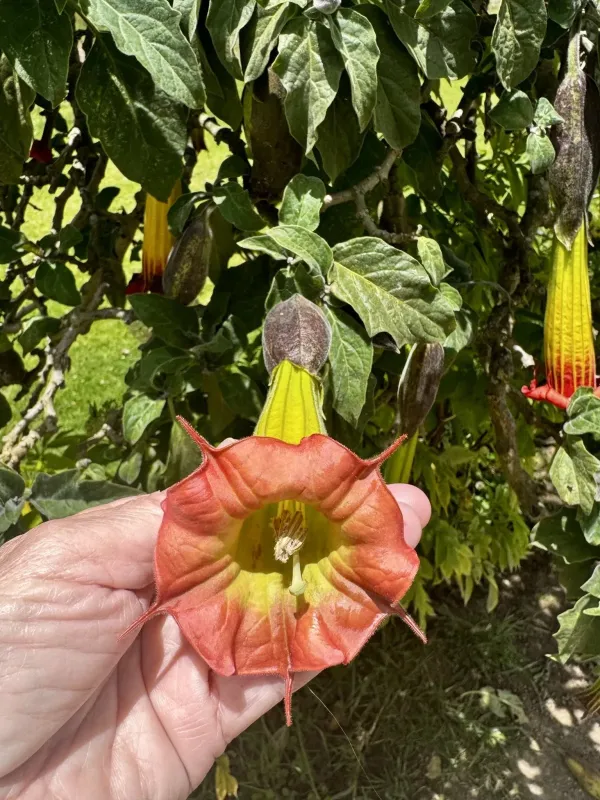
Description
Growing requirements
Cuban Angel's Trumpet (Brugmansia x cubensis) is a complex hybrid belonging to the Solanaceae family. This ornamental shrub is highly prized for its large, pendulous, trumpet-shaped flowers that release a potent, sweet fragrance during the evening and night hours.
Originating from the tropical regions of South America, this plant is traditionally grown as a large container shrub in temperate climates or as a permanent landscape feature in frost-free, tropical environments.
The cultural requirements demand a nutrient-rich, well-drained growing medium with a pH range between 6.0 and 7.0. Regular irrigation is essential as the large surface area of the leaves leads to rapid transpiration, particularly in high-temperature environments.
Optimal growth occurs under full sun to partial shade conditions. In regions with extreme solar intensity, afternoon shade is recommended to prevent leaf scorching and to maintain the turgor pressure of the foliage and flowering stems.
A consistent fertilizer regimen is necessary to support the plant's high metabolic activity during the growing season. High-potassium fertilizers are preferred to promote abundant flowering and robust structural development of the branches.
Main diseases and pests
Spider mites represent a significant threat to Brugmansia, especially in dry greenhouse conditions, necessitating consistent moisture management or the application of acaricides.
Whiteflies are common pests that colonize the undersides of leaves, and their feeding activity can lead to the formation of sooty mold on the honeydew deposits left on the foliage.
Aphid infestations are frequently observed on new, tender growth, which can lead to the transmission of phytopathogenic viruses and stunted plant development.
Root rot, primarily caused by waterlogging in poorly aerated soils, is the most common physiological challenge, often exacerbated by the use of oversized pots or inadequate drainage systems.
General plant health is maintained through a combination of cultural practices, such as proper sanitation, appropriate spacing, and the application of integrated pest management strategies.