
Angel's Trumpet
Brugmansia arborea (L.) Lagerh.
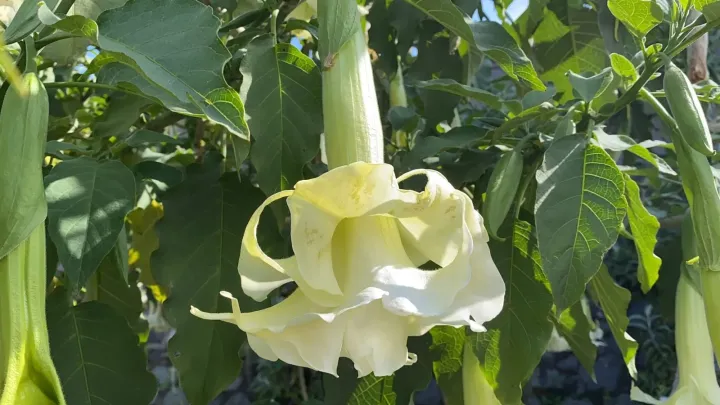
Description
Growing requirements
Brugmansia arborea, commonly known as Angel's Trumpet, is a woody perennial shrub belonging to the Solanaceae family. Originating from the tropical regions of the Andes, it is highly valued for its large, pendulous, and fragrant flowers.
The plant requires nutrient-rich, well-draining soil to thrive. As a heavy feeder, it demands consistent fertilization throughout the growing season, particularly with balanced NPK fertilizers to support its rapid biomass development.
Climate adaptability is limited for this species. It is a frost-sensitive plant that must be kept in containers in cooler temperate zones, allowing it to be moved indoors during winter months to avoid freezing damage.
Sunlight exposure is crucial for flowering. While it can tolerate partial shade, full sun promotes the most abundant blooming, provided that water supplies are sufficient to prevent leaf wilting during high temperatures.
Moisture management is key. The plant requires significant hydration during hot summer days, often necessitating multiple waterings to ensure the root system does not dry out, which would otherwise result in bud drop.
Main diseases and pests
The primary pests affecting Brugmansia are spider mites, aphids, and whiteflies. These insects frequently exploit the plant's broad leaves, especially in indoor environments with low humidity or poor airflow.
Fungal pathogens such as root rot represent the main disease threat. Overwatering or poor soil drainage creates anaerobic conditions that favor fungal development, quickly compromising the health of the root system.
Preventative care involves ensuring proper sanitation of the growing environment and maintaining healthy plant vigor. Proper spacing and airflow are essential to inhibit the spread of common greenhouse pathogens.
It is important to note that all parts of the plant are poisonous due to the presence of tropane alkaloids. Handling the plant requires care, and gloves should be used during pruning to prevent skin irritation or accidental ingestion.
Chemical control strategies for pests should utilize systemic insecticides or horticultural oils. When treating for diseases, early detection and the application of appropriate fungicides are recommended to prevent irreversible damage.