
Sapodilla
Manilkara zapota (L.) Royen
Description
Sowing dates
Propagation of sapodilla is primarily achieved through seeds or vegetative methods such as grafting and air-layering, which are preferred for commercial orchards.
Seeds should be cleaned and planted soon after extraction from the fruit, as their viability decreases significantly if stored in improper conditions.
Optimal germination requires a temperature range of 25-30 degrees Celsius and a well-draining potting medium to prevent fungal issues.
Grafted sapodilla trees are highly recommended for agricultural production because they reach maturity much faster than seedling-grown trees.
Young saplings require careful hardening off and partial shade protection before being transplanted into their final field locations.
Growing requirements
Manilkara zapota, a member of the Sapotaceae family, is a tropical evergreen species that thrives in warm, humid climates and is intolerant to frost.
The ideal soil for sapodilla is deep, fertile, and well-drained, although the tree is remarkably adaptable to various soil types, including limestone and saline soils.
While the tree is drought-tolerant, consistent water supply is essential for sustained flowering, fruit set, and maintaining high fruit quality.
Full sun exposure is necessary for the development of a healthy canopy and optimal photosynthesis, which directly influences the overall yield.
The tree prefers low to medium altitudes and is sensitive to strong winds, which can damage brittle branches and cause fruit drop.
Yield
A well-managed sapodilla orchard can produce significant annual yields, with mature trees capable of producing hundreds of kilograms of fruit.
Production cycles are continuous, though there are usually two main peak harvest periods annually depending on local rainfall patterns.
Proper pruning techniques are vital to control tree height and facilitate easier harvesting, while also increasing light penetration for fruit development.
Nutritional management, particularly the application of balanced NPK fertilizers, is critical to ensure tree vigor and prevent biennial bearing patterns.
Sapodilla trees are known for their longevity, often remaining productive for several decades under favorable cultivation conditions.
Main diseases and pests
The fruit fly is a primary pest that causes major losses by laying eggs inside the fruit, leading to premature rot and spoilage.
Scale insects and mealybugs often cluster on young stems and leaves, extracting plant sap and leading to secondary sooty mold growth.
Anthracnose and leaf spot diseases are common, especially in humid environments, requiring proactive fungicide application and good orchard sanitation.
Effective management includes regular monitoring, the use of pheromone traps for fruit flies, and maintaining an open canopy structure for air circulation.
Borer insects can occasionally damage the bark or stems, making regular tree inspections an important aspect of orchard management.
Harvesting
Harvesting sapodilla requires a gentle touch as the fruits are susceptible to bruising and skin damage during handling.
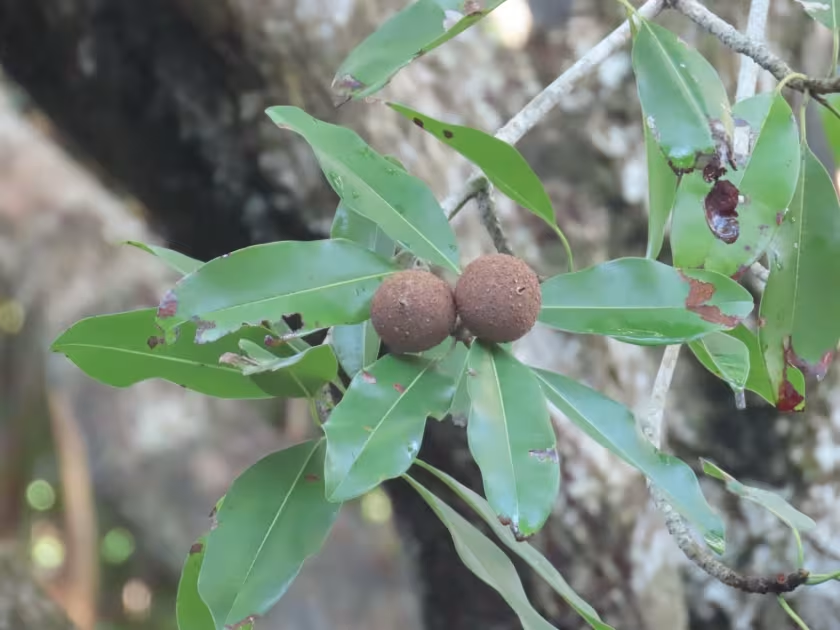
Maturity is indicated by the brown, scruffy skin texture; growers verify ripeness by scratching the skin to ensure no sticky white latex exudes.
Fruits are typically harvested by clipping the stalk, which helps prevent latex flow from the wound and keeps the fruit cleaner.
Post-harvest ripening is necessary, as the fruit softens at room temperature over several days after being removed from the tree.
Proper packing in crates with protective liners is essential for market transport to maintain the quality and appearance of the sapodilla fruit.