
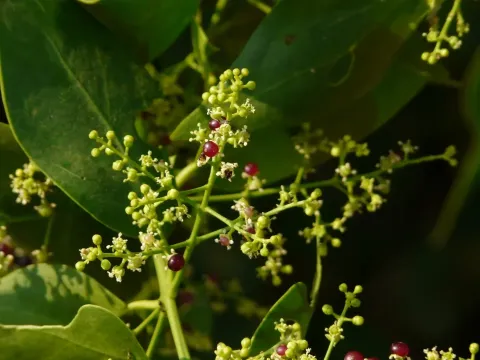
Salvadora
Salvadora
Salvadora, particularly the species Salvadora persica, is a perennial evergreen shrub or small tree belonging to the Salvadoraceae family. It is native to the arid and semi-arid regions of Africa, the Middle East, and India, where it thrives in extreme environments.
What the section contains


Salvadora
This crop is recognized for its extraordinary salt tolerance, making it an essential plant for reclaiming saline or sodic soils that are unsuitable for standard farming practices. It is a highly valued halophyte with significant ecological importance in desert regions.
The plant requires high light intensity and is perfectly adapted to desert climates with scorching temperatures. While drought-tolerant once established, young plants benefit significantly from supplemental irrigation to ensure survival and proper development of the root system.
In terms of soil, Salvadora is remarkably flexible, growing in sandy, rocky, or saline soils. It does not require high levels of soil fertility, although adequate soil depth is necessary to allow its taproots to access deep-seated moisture during severe dry seasons.
Beyond its ecological role, Salvadora is economically important for its medicinal properties. The branches are widely used as natural toothbrushes (miswak), and the seeds are rich in lauric and myristic acids, which are extracted for the cosmetic and soap-making industries.
Salvadora is relatively resistant to major agricultural diseases, but like many woody plants, it can suffer from fungal leaf spots if exposed to high humidity and poor air circulation in nursery conditions.
Insects, such as scales and aphids, are the most common pests, targeting young shoots and leaves. Regular scouting is recommended during the early stages of the plantation to prevent significant damage to new growth.
Root rot is a potential risk in areas with waterlogged soils or improper irrigation practices. Maintaining proper drainage is essential for the long-term health of the Salvadora plantation.
Herbivory can be a major challenge, as camels, goats, and rodents find the young foliage highly palatable. Protecting young seedlings with fencing or guards is crucial for the successful establishment of the crop.
Biological pest control is preferred over chemical interventions, especially when the end product, such as stems for oral hygiene, is intended for direct human use in medical or cosmetic applications.