
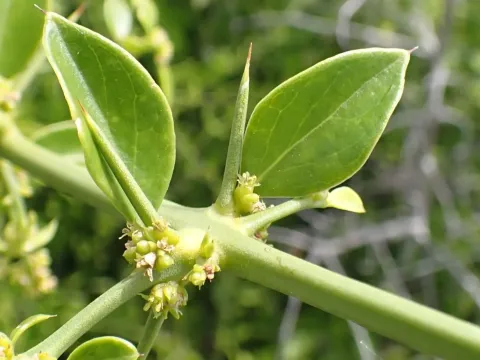
Azima
Azima
Azima is a genus of evergreen prickly shrubs belonging to the Salvadoraceae family. These plants are noted for their remarkable adaptability to harsh environments, thriving in arid, semi-arid, and saline soil conditions typical of tropical and subtropical zones.
What the section contains

Azima
In their natural range, which includes parts of Africa, South Asia, and Madagascar, these shrubs occupy sunny and open areas. They possess a high degree of drought tolerance, making them a hardy option for climates where water scarcity is a significant limiting factor for agriculture.
Botanically, Azima is characterized by its heavily branched structure and opposite leaves, accompanied by sharp, axillary thorns. This anatomical defense mechanism serves as an effective barrier against browsing herbivores in volatile ecosystems.
The cultivation of Azima requires well-drained soils, ideally with a neutral to slightly alkaline pH. Proper soil aeration is critical, as the roots are highly susceptible to rot if stagnant water conditions occur, necessitating strategic planting in raised beds or well-drained terrain.
The primary economic value of Azima lies in its medicinal properties. Various plant parts are utilized in traditional medical practices and pharmaceutical research due to the presence of potent alkaloids and bioactive compounds known for their anti-inflammatory and antiseptic effects.
While Azima maintains strong natural immunity, it may occasionally be infested by common tropical pests such as scale insects or spider mites when grown in high-density plantations or under poor horticultural management.
Fungal issues are generally related to overwatering or poor ventilation within the dense foliage. Maintaining a regular pruning schedule is essential to improve airflow, thereby preventing the establishment of fungal pathogens and ensuring the health of the individual plants.