
Salvadora persica
Salvadora persica
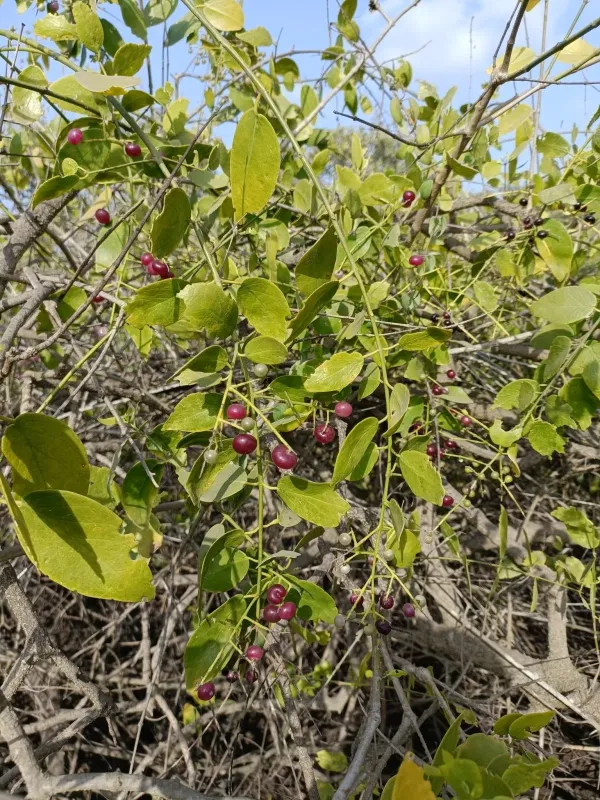
Description
Sowing dates
The propagation of Salvadora persica in its natural habitat relies on seed dispersal by animals and birds. In agricultural settings, seeds should be sown immediately after harvest because they have a relatively short shelf life and lose viability quickly if stored improperly.
The ideal time for sowing coincides with the onset of the rainy season, which provides the necessary moisture for the seeds to germinate and the seedlings to establish a strong root system before the dry spell begins.
Pre-treatment, such as soaking the seeds in water for 24 hours, can significantly improve germination rates. Seedlings should be grown in containers until they reach a height of at least 30-50 cm, ensuring they are sturdy enough to survive in the field.
When transplanting into the field, ensure a spacing of 3 to 4 meters between individual plants to allow for the wide, sprawling growth habit of the shrub. This distance is crucial for proper aeration and maintenance access.
During the first year, young plants require supplemental watering and partial shade to mitigate heat stress. Once established, the shrubs become highly drought-tolerant and require minimal human intervention.
##requirements##Salvadora persica is a well-known halophyte and xerophyte, perfectly adapted to harsh arid environments. It is highly valued for its ability to grow in saline soils where most other agricultural crops would fail, making it excellent for land reclamation.
The plant thrives in temperatures ranging from +20°C to +35°C. It is extremely heat-tolerant and can survive prolonged drought periods by developing a deep, extensive root system capable of tapping into deep moisture sources.
While it prefers sandy or sandy-loam soils, it is adaptable to various soil types. Good drainage is essential, as the plant is susceptible to root rot if water remains stagnant around the base for extended periods.
Abundant sunlight is required for optimal photosynthesis and the production of secondary metabolites in the wood and leaves. These compounds are what give the plant its renowned medicinal properties.
Though naturally resilient on poor soils, providing a small amount of organic fertilizer during the early growth stages can significantly accelerate the development of biomass for harvesting.
##yield##The primary economic product of Salvadora persica is the root and stem wood, widely known as "miswak," which is used as a natural oral hygiene tool. Harvesting typically begins 3 to 5 years after planting.
Productivity is significantly enhanced by formative pruning. By shaping the shrub and encouraging branching, growers can maximize the yield of harvestable twigs, which are the main commercial commodity.
The fruits, often called "pilu," are edible and contain significant amounts of oils. Under optimal conditions, a mature shrub can produce between 5 and 15 kilograms of fruit annually, which can be harvested for oil extraction.
The seeds possess high oil content, often reaching up to 40 percent. This oil is versatile and can be used in the cosmetic, pharmaceutical, or technical industries, providing an additional revenue stream for farmers.
Regular maintenance, including selective harvesting and rejuvenation pruning, ensures that the shrub remains productive for several decades, maintaining its value as a sustainable resource.
##threats##Salvadora persica possesses natural chemical defenses, including various alkaloids and antibacterial compounds, which make it largely resistant to most common plant diseases and insect infestations.
The primary threat to the plant is fungal root rot, which typically occurs only in scenarios where there is poor soil drainage or chronic waterlogging. Keeping the soil well-aerated is the most effective preventative measure.
Occasional infestations of scale insects or aphids might occur on new growth, but they rarely threaten the survival of the shrub. These pests can generally be managed by maintaining good plant vigor through proper spacing and pruning.
Since the plant is inherently sturdy, there is no need for intensive pesticide use. In fact, heavy chemical application can disrupt the natural biological balance and is strongly discouraged in sustainable cultivation.
Sanitation practices, such as removing dead branches or infected plant material, are sufficient to prevent the spread of minor pathogens that might occasionally develop in densely planted rows.
##harvest##The harvest of miswak wood is done manually by carefully selecting and cutting side branches of appropriate diameter. Using a clean, sharp knife ensures the main trunk is not damaged, preserving the plant's health.
After harvesting, twigs should be cleaned of leaves and bark (depending on market requirements) and dried in a shaded, well-ventilated area to maintain their antiseptic potency and prevent premature drying or cracking.
Fruit harvesting should take place as soon as the berries reach maturity. Because they are perishable, they must be processed for oil extraction or used shortly after harvest to prevent spoilage due to sugar content.
Leaves can be harvested for fodder throughout the growing season, but caution is needed to avoid over-pruning, which could exhaust the plant's nutrient reserves. A partial harvest approach is recommended.
Proper record-keeping of harvest intervals is essential to ensure sustainable management. Allowing the shrub adequate recovery time between heavy prunings is critical for long-term farm productivity.