
Salvadora australis
Salvadora australis
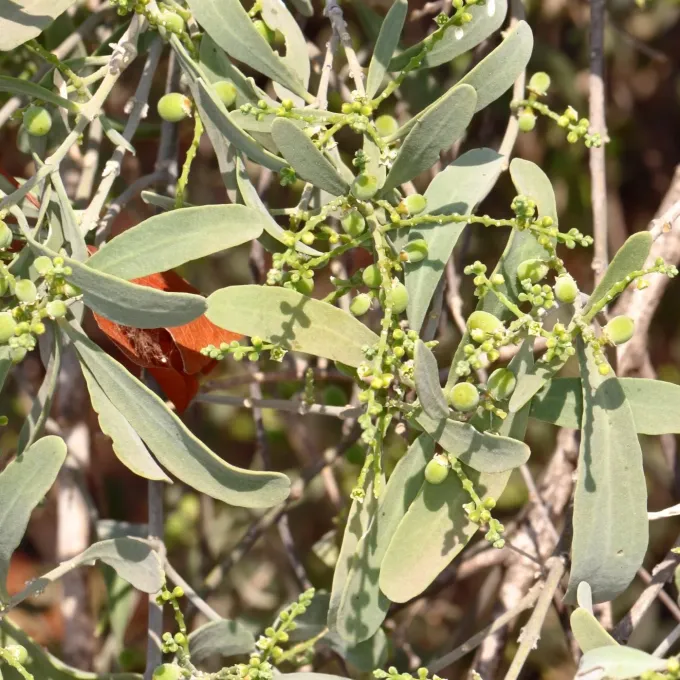
Description
Growing requirements
Salvadora australis is a notable member of the Salvadoraceae family. It is an evergreen woody plant characterized by its remarkable resilience to harsh environments, particularly saline and arid soil conditions.
This species thrives in hot, arid climates with minimal precipitation. In its native habitat, it successfully survives in regions where conventional agricultural crops would perish due to extreme water scarcity.
Biologically, the plant functions as a xerophyte or halophyte, demonstrating a high tolerance for soil salinity and mineral-rich groundwater. Its root system is exceptionally robust, allowing it to extract deep-seated soil moisture.
Successful cultivation requires well-drained soils with a neutral to slightly alkaline pH level. The plant is highly sensitive to waterlogging, as excessive soil moisture often leads to root rot and other physiological stressors.
The optimal temperature for development ranges between 25 and 35 degrees Celsius. Salvadora australis cannot tolerate freezing temperatures, effectively restricting its agricultural range to tropical and subtropical climate zones.
Harvesting
The primary economic use of this crop involves the extraction of valuable fats and oils from its seeds, which are utilized in the cosmetic and pharmaceutical industries. Harvesting must be performed carefully to avoid damaging the sensitive generative structures of the plant.
Furthermore, the foliage can serve as a supplemental fodder source for camels and goats in regions where other green forage options are limited. Proper grazing management is essential to ensure the longevity of the plantings.