
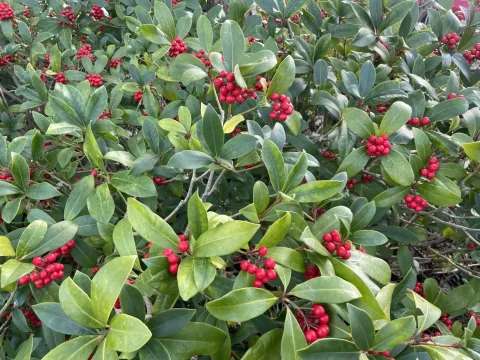
Skimmia
Skimmia Thunb.
Skimmia (lat. Skimmia Thunb.) is a genus of evergreen shrubs belonging to the Rutaceae family. These plants are native to temperate regions of Asia, primarily found in the Himalayas, China, and Japan, where they naturally occur in shaded woodland environments.
What the section contains


Skimmia
Botanically, Skimmia is recognized for its dense, glossy foliage and fragrant flowers. Being a dioecious genus, plants are divided into male and female specimens. Successful fruit production in females relies on the presence of a male pollinator nearby.
The cultural requirements demand well-drained, acidic soil rich in organic matter. Skimmia does not tolerate waterlogged conditions, which lead to root asphyxiation, nor does it thrive in alkaline soils, where nutrient lockout commonly occurs.
In terms of climate, the plant prefers cool, temperate conditions with high atmospheric humidity. It is sensitive to extreme temperatures, requiring protection from both harsh winter frosts and scorching summer heat, typically provided by partial to full shade locations.
Standard agronomic practices include applying organic mulch annually to conserve soil moisture and prevent drastic temperature changes around the root zone. Consistent watering is essential during dry periods to maintain plant health and encourage robust growth.
The most significant pests affecting Skimmia include spider mites and scale insects. These pests often proliferate under low-humidity conditions, necessitating regular monitoring of the foliage and, if necessary, the application of targeted miticides or horticultural oils.
Fungal pathogens such as Phytophthora root rot pose a major threat to Skimmia, especially in poorly drained sites. Strict adherence to irrigation schedules and the selection of well-draining planting sites are critical preventative measures against soil-borne pathogens.