
Reeves' skimmia
Skimmia reevesiana (Fortune) Fortune
Description
Growing requirements
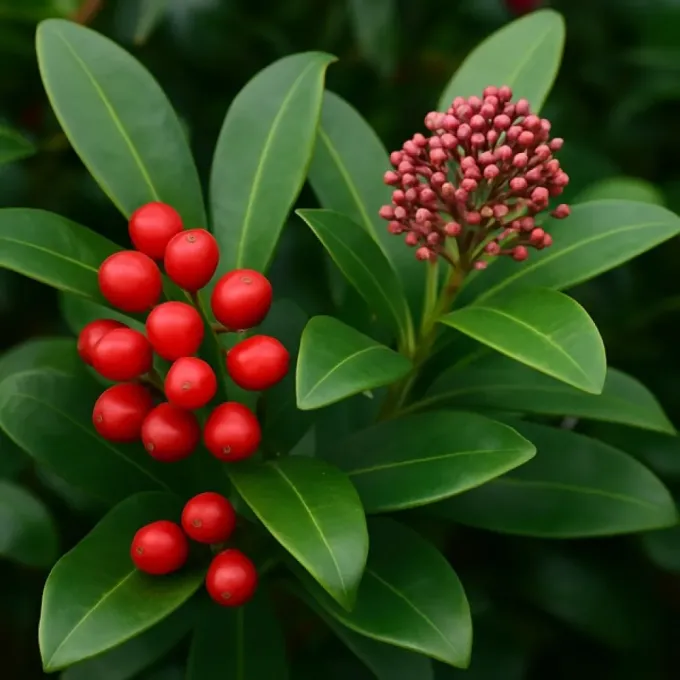
Reeves' skimmia (Skimmia reevesiana) is an evergreen shrub belonging to the Rutaceae family. Native to the forest regions of China and Taiwan, this plant is valued in horticulture for its dense, glossy foliage and long-lasting ornamental fruits.
The plant thrives in acidic to neutral soils that are rich in organic matter. A key requirement for healthy growth is well-draining soil, as this species is highly susceptible to root rot if exposed to waterlogged conditions for extended periods.
Regarding light, Skimmia reevesiana prefers partial to full shade. Direct sunlight can scorch the leaves, so the best planting sites are those sheltered by larger trees or structures, mimicking its natural understory habitat.
This species exhibits moderate cold hardiness. In regions with severe winters, it should be protected from freezing winds or grown as a container plant that can be moved indoors during the coldest months to ensure survival.
Consistent soil moisture is essential for success. Mulching the base of the plant with pine needles or acidic compost helps to maintain the required pH level and retains moisture during dry spells, fostering a robust root system.
Yield
The primary use of Reeves' skimmia is in landscaping and interior decoration. Its ability to produce bright red, long-lasting berries in late autumn and winter makes it a prized specimen for adding colour to the garden during the dormant season.
A significant biological advantage of this specific species is that it is self-fertile. Unlike many other members of the genus that require separate male and female plants for fruit production, Reeves' skimmia develops berries on a single plant.
In commercial horticulture, it is widely utilized as a pot plant for patios and seasonal interior displays. Its slow-growing nature means it remains compact for years, reducing the need for constant maintenance or pruning.
Propagation is typically achieved through cuttings or seeds under controlled conditions. Professional nurseries emphasize the importance of healthy stock to ensure the plant reaches its full potential as a decorative feature in private and public spaces.
While the plant has no agricultural or food production role, its aesthetic impact is profound. It serves as an excellent companion plant for other acid-loving shrubs and ferns, creating a cohesive and visually pleasing garden environment.
Main diseases and pests
The most common threats to Reeves' skimmia are fungal diseases triggered by poor drainage or excessive humidity. Leaf spots and root decay can quickly compromise the plant's health, making proper soil management a critical preventive measure.
Pests such as spider mites and scale insects are frequent issues, especially when the plant is kept in dry, indoor environments. Regular monitoring of the foliage and maintaining optimal air humidity are essential to prevent infestation.
For chemical control, copper-based fungicides are often effective against leaf spot infections. In cases of severe pest attack, systemic insecticides may be necessary to target the insects directly and protect the new growth from damage.
Iron chlorosis frequently occurs if the soil pH is not maintained at the correct acidic level. This is observed as yellowing leaves with green veins and is best treated with chelated iron fertilizers to restore the plant's natural vibrancy.
Good air circulation around the shrub is vital for preventing the spread of diseases. Pruning should be carried out after the fruiting season to remove any dead or damaged stems, which helps keep the plant vigorous and resistant to stress.