
Japanese skimmia
Skimmia japonica Thunb.
Description
Growing requirements
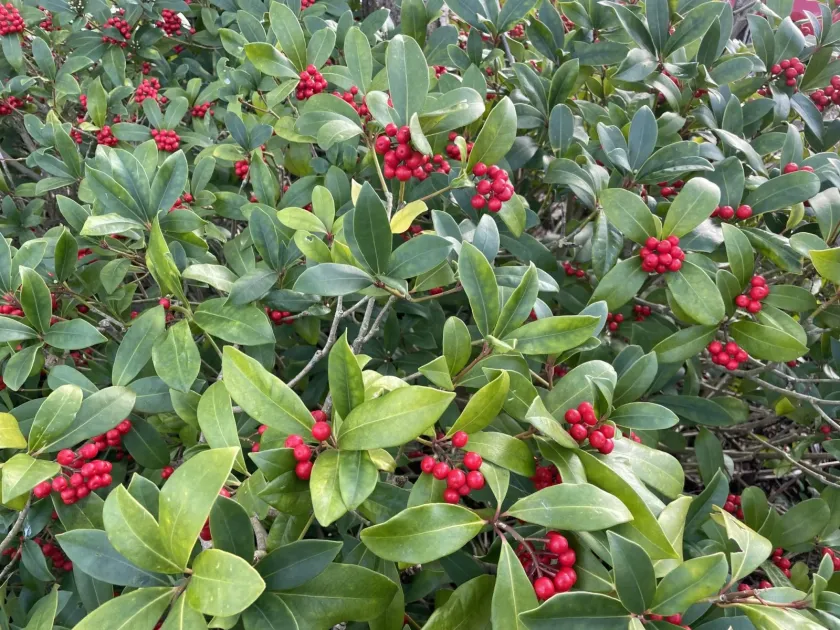
Japanese skimmia (Skimmia japonica Thunb.) is a slow-growing evergreen shrub belonging to the Rutaceae family. Native to the forests of East Asia, including Japan and China, it is highly valued for its glossy leaves, fragrant flowers, and vibrant red berries on female plants.
Cultivation requires shaded or semi-shaded locations. Full sun exposure often leads to leaf scorching and yellowing, so placing the shrub in a spot protected from afternoon sun is essential for maintaining deep green foliage.
Soil requirements are strict: the substrate must be acidic, well-draining, and rich in humus. Heavy or waterlogged soils are detrimental to the roots, often causing them to rot. Integrating peat or specialized compost for acid-loving plants is recommended during planting.
Regarding climate, the plant thrives in moderate temperatures and high humidity. While it is hardy in many regions, temperatures below -15°C can cause damage. In colder zones, it is best grown in containers that can be moved to a protected environment during winter.
Agricultural care focuses on consistent moisture and maintaining soil acidity. Water should be lime-free, as calcium excess can lead to chlorosis. Fertilizing should be done in early spring with slow-release acidic fertilizer to support growth and flowering.
Main diseases and pests
The most common pests affecting Japanese skimmia are spider mites, especially in indoor or dry garden conditions, and scale insects that colonize stems and the undersides of leaves.
Root rot is the primary disease threat, usually occurring due to poor soil drainage or excessive irrigation. It manifests as a gradual decline in foliage health and eventual collapse of the shrub.
Chlorosis is a frequent issue caused by the presence of lime in the water or soil. This nutrient imbalance prevents the plant from absorbing iron, resulting in pale or yellow leaves while veins remain green.
Effective pest management involves regular monitoring and the use of horticultural oils or systemic insecticides when infestation levels are high. Maintaining proper air circulation around the canopy helps prevent fungal infections.
Pruning is rarely needed but can be performed to remove dead wood or shape the plant after flowering. Clean tools and hygiene are crucial to prevent the spread of diseases within the garden bed.